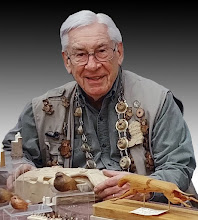
Misty Hollow Carving
This BLOG is sponsored by “Misty Hollow Carving”. You are welcome to visit Misty Hollow and see all of my carvings.
My Web Site is a like a Gallery – please drop in for a stroll through.
To help me promote my Web Site please copy this URL address and email to someone today http://www.murraylincoln.com/
* * * * * * * *
Today’s Blog Post
I am a “Multicultural Marshmallow”
At great risk of making statements again about things that I don’t really know/have the right information about… here I go again! At least in some folk’s eyes that is the case.
I am jumping in again about Quebec and the present situation that continues to grow about the wearing of a Niqab in that province.
In doing some more reading of articles posted on this growing situation in the province of Quebec I have discovered a new thing about myself… I have been placed in a “new Box”… a new category by some other folks. And I am not sure if it is good or bad… if I should be uncomfortable and make changes or simply accept it as a compliment. It is confusing to say the least – this new “Box”.
Here it is.
I am now labeled as a “Multicultural Marshmallow”. Or as this quote from the article posted in the Globe and Mail – March 19, 2010 by Les Perreaux states…
“Ms. McAndrew argues Canadians looking down on Quebec should consider why debate seems impossible outside the province.
“Public debate in Quebec is vigorous, and the level of the debate is complex. On diversity, the debate is very poor in Canada. It's marshmallow multiculturalism. You're okay, I'm okay,” she said.”
End quote.
Makes me wish that I could live in Quebec now… and then I could enter the vigorous debate.
Les Perreaux’s article is one of the best that I have read.
He points out that in all of Montreal there may be only a few dozen women that were the full veil – according to Muslim Leaders.
The article also points to the fact that some of the debate that is among women is a result of the repressive ways that the Catholic Church treated women years ago. And as time went on women rose to rebel against these kinds of oppression.
In my earlier article I pointed to “domineering” language laws in Quebec. I was challenged or confronted on my statements by people that had a better understanding than me. (I yielded to other opinions at that time.)
Les Perreaux’s article demonstrates that it is not only about language but rather about a far bigger issue… the proclamation that has some powerful statements about religion.
Look at this quote from the same article…
“Quebec's leading feminist group called for formal limits on accommodation last year. Scores of intellectuals more recently signed at least two manifestos calling on Quebec to become a secular state.
Two years ago, philosopher Charles Taylor and sociologist Gérard Bouchard issued a report calling on Quebec to adopt “open secularism” and guidelines putting equality ahead of religious accommodation. The duo had conducted hearings where Quebeckers blew off steam on the issue. Capping off two years of raucous debate, their report acted like a sedative that put the crisis to rest for a while.”
End quote.
So it is not language or the maintaining of the French Language that is a problem. It has to do with breaking free of the Religious Domination that is a lot of the conflict. The need to declare and perhaps even force upon the whole province a vastly different way of thinking – where the religious ideology is pushed aside and a new secularism(another religion of non-religion) is fully adopted.
Now there is a bigger problem than language… and a bigger issue of domineer-ism… it will potentially expect an entire population to become non-religious in all that is done. No doubt you can have a personal religion and faith – just don’t show it.
I wonder if Catholic priests would not be allowed to wear their priestly outfits/garments outside of the church?
I wonder if Nuns will need to dress differently as well. No "Black and Whites".
The Niqab is a religious ornament worn by some to express their standard of faith. And wearing it bothers some folk a whole lot.
I have stated that it doesn’t matter to me…. in every case except when I cannot read the woman’s mouth when she is speaking to me.
And as I live in a part of Canada other than Quebec, speak primarily English, and don’t really know what is going on… I am a “Multicultural Marshmallow”. Or I have adopted ideas that have placed me in this group.
Isn’t Canada a free country? I mean other than the Taxation and the Government that we live under… isn’t it FREE?
Marshmallows are good – roasted over a camp fire or eaten right out of the package. I think I am okay.
~ Murray Lincoln ~
http://www.murraylincoln.com/
* * * * * * * * * * * * *
Sources:
http://www.theglobeandmail.com/news/national/quebec/quebecs-view-on-niqab-creates-fault-line/article1506700/
Saturday, March 20, 2010


Friday, March 19, 2010
Theresa Fraser and Our Siamese Fighting Fish
Misty Hollow Carving
This BLOG is sponsored by “Misty Hollow Carving”. You are welcome to visit Misty Hollow and see all of my carvings.
My Web Site is a like a Gallery – please drop in for a stroll through.
To help me promote my Web Site please copy this URL address and email to someone today http://www.murraylincoln.com/
* * * * * * * *
Today’s Blog Post
Theresa Fraser and Our Siamese Fighting Fish
Last evening, about an hour before our supper meal, my wife came into the kitchen and announced that our beautiful fish had died. Kind of sad to say the least in that we have had it for a long time and it has outlasted at least one other fish – maybe even two.
The fish was so colourful and full of life as it swam in the sunshine. The Fish Guy had told us that the fish would eat better if it had lots of sunshine.
It was a Siamese Fighting Fish that couldn’t be allowed to swim with others in that it had a nasty disposition. When you put a mirror up beside the fish tank he will attack his own image. Not a good attitude at all.
Alida said, “Tomorrow morning we can have a burial for the poor little guy I guess…” with a sad note in her voice. She loved the silly thing! Sheesh!
Later after our meal I was putting away some things and just happened by the fish tank. I nearly jumped out of skin. The plant that is mounted in the top of tank suddenly moved! THE FISH WAS ALIVE! DOUBLE SHEESH!!!!
The crazy thing apparently was asleep in the roots of the plant when my wife looked. It is old – but it is also a live and was just sleeping… or something!
This morning my friend Jessika sent along another story for me.
Apparently Theresa Fraser, 77, a woman who lives in Garden of Eden, N.S., got a shock when she learned she had been declared dead not once, but twice, in the past five months by the federal government.
The story told of her going to the Bank to find out that her Pension Check had not been deposited by the Government. They were convinced that she had died.
Can you imagine if you were Theresa Fraser?
It appears that another woman, that was not far away had the same name and initials, had passed away. So they cut off Theresa Fraser and when they found out that the GST check had been cashed they wanted that money back as well.
In Canada when you die – you die in many departments of the Government. Weird but true.
So Theresa Fraser and our fish have a lot in common. Sit still too long, sleep a little more than usual, or have some one start a rumour and your funeral could be in the works.
Come to think of it… I sleep more than usual lately… don’t move near as much as I did before retirement… and am getting closer to 77.
Sorry I gotta run…. Gotta get to the gym right away… CYA Later!
~ Murray Lincoln ~
http://www.murraylincoln.com/
* * * * * * * * * * * * *
Sources:
http://ca.news.yahoo.com/s/cbc/100317/canada/canada_novascotia_ns_garden_of_eden_woman_dead
This BLOG is sponsored by “Misty Hollow Carving”. You are welcome to visit Misty Hollow and see all of my carvings.
My Web Site is a like a Gallery – please drop in for a stroll through.
To help me promote my Web Site please copy this URL address and email to someone today http://www.murraylincoln.com/
* * * * * * * *
Today’s Blog Post
Theresa Fraser and Our Siamese Fighting Fish
Last evening, about an hour before our supper meal, my wife came into the kitchen and announced that our beautiful fish had died. Kind of sad to say the least in that we have had it for a long time and it has outlasted at least one other fish – maybe even two.
The fish was so colourful and full of life as it swam in the sunshine. The Fish Guy had told us that the fish would eat better if it had lots of sunshine.
It was a Siamese Fighting Fish that couldn’t be allowed to swim with others in that it had a nasty disposition. When you put a mirror up beside the fish tank he will attack his own image. Not a good attitude at all.
Alida said, “Tomorrow morning we can have a burial for the poor little guy I guess…” with a sad note in her voice. She loved the silly thing! Sheesh!
Later after our meal I was putting away some things and just happened by the fish tank. I nearly jumped out of skin. The plant that is mounted in the top of tank suddenly moved! THE FISH WAS ALIVE! DOUBLE SHEESH!!!!
The crazy thing apparently was asleep in the roots of the plant when my wife looked. It is old – but it is also a live and was just sleeping… or something!
This morning my friend Jessika sent along another story for me.
Apparently Theresa Fraser, 77, a woman who lives in Garden of Eden, N.S., got a shock when she learned she had been declared dead not once, but twice, in the past five months by the federal government.
The story told of her going to the Bank to find out that her Pension Check had not been deposited by the Government. They were convinced that she had died.
Can you imagine if you were Theresa Fraser?
It appears that another woman, that was not far away had the same name and initials, had passed away. So they cut off Theresa Fraser and when they found out that the GST check had been cashed they wanted that money back as well.
In Canada when you die – you die in many departments of the Government. Weird but true.
So Theresa Fraser and our fish have a lot in common. Sit still too long, sleep a little more than usual, or have some one start a rumour and your funeral could be in the works.
Come to think of it… I sleep more than usual lately… don’t move near as much as I did before retirement… and am getting closer to 77.
Sorry I gotta run…. Gotta get to the gym right away… CYA Later!
~ Murray Lincoln ~
http://www.murraylincoln.com/
* * * * * * * * * * * * *
Sources:
http://ca.news.yahoo.com/s/cbc/100317/canada/canada_novascotia_ns_garden_of_eden_woman_dead
Thursday, March 18, 2010
Weird News and Stories – I love them
Misty Hollow Carving
This BLOG is sponsored by “Misty Hollow Carving”. You are welcome to visit Misty Hollow and see all of my carvings.
My Web Site is a like a Gallery – please drop in for a stroll through.
To help me promote my Web Site please copy this URL address and email to someone today http://www.murraylincoln.com/
* * * * * * * *
Today’s Blog Post
Weird News and Stories – I love them
So what do you say when you read the headlines like...?
“Man found with stolen property after hailing police cruiser with middle finger “
“US man finds cold intruder in bed with him, holds him at bay with bat for police”
“Plane makes emergency landing on SC beach, killing jogger who never knew what hit him”
I mean it is way more fun that the Political Stuff that comes my way – though it is even weirder.
No kidding the guy near Kenora, Ontario gave the one finger salute to a passing OPP Officer. The Officer decided that he would come around again and question the dude. While doing that the Officer found that the One Finger man was carrying stolen property. Talk about lucky – or no luck.
The next one was a man that had too much to drink, broke into some one’s home, climbed into the bed because he was cold.
But the top one was the poor guy on the SC Beach that was jogging. He had his ear buds listening to his music while he was running. The aircraft had lost power and came down right on top of him. He was gonzo and never knew what hit him.
I love the news stories about these kinds of off the wall snap shots.
These small stories never leave you. In fact small stories are perhaps the most powerful means to get your point across.
Away back in my first physics class Mr. Currie was our teacher. He was trying to get across the idea of electricity and its potential power or harm. In Grade 10 that is not the most important thing in your life. But as Mr. Currie started to share his story about riding his horse along a fence line and an approaching storm coming… he caught my attention.
He told how the large cowboy hat that he was wearing had water dripping from it brim. Then as he looked out he could see small lightening bolts coming from his horse’s ears… and also off his hat brim. He realized that the air was super charged with the electricity from the approaching lightening storm.
He got off his horse and walked beside it so that he was not the highest point on the horse’s back. He got away from the fence line so if the lightening did travel along the wire he would not get hit.
As I re-tell that today it is vivid and real. I can see the small lightening bolts off the horse’s ears and feel the rain coming down.
I heard that story 50 years ago – yet it is as real as it was at that moment. And I think that with Mr. Currie’s age then – almost 65 years old – the story was likely 50 years old as well.
Imagine a 100 year old story that is still live today.
Then there is the story of my friend Winston who has a balance problem. Winston, with his cane in hand, tried to retrieve something over the edge of a steep hill…. And ooops… aaahhh… Winston was rolling over and over and over again down the hill. As he told me the story I was almost dizzy with him. Way to go Winston!
But the there was Terry and his hilarious stories about his work in the Hospital in the old days. Terry makes me say over and over again – “You have to be kidding… the person died right there on the X-Ray table???!”
I love stories.
Facebook and Twitter kind of make that possible on a global way… yet the story must be short – very short.
Along time ago in my grandpa’s garage – machine shop the men stood around the old stove and told story after story. Little boys like me and my brother listened.
Facebook and Twitter as well as other things that may come don’t quite do that for me… nor the next generation.
I would love to hear your story today. I am listening.
~ Murray Lincoln ~
http://www.murraylincoln.com/
* * * * * * * * * * * * *
Sources:
http://ca.news.yahoo.com/s/capress/100317/national/police_finger
http://ca.news.yahoo.com/s/capress/100317/koddities/us_odd_cold_intruder
http://ca.news.yahoo.com/s/capress/100317/koddities/us_plane_kills_beachgoer
This BLOG is sponsored by “Misty Hollow Carving”. You are welcome to visit Misty Hollow and see all of my carvings.
My Web Site is a like a Gallery – please drop in for a stroll through.
To help me promote my Web Site please copy this URL address and email to someone today http://www.murraylincoln.com/
* * * * * * * *
Today’s Blog Post
Weird News and Stories – I love them
So what do you say when you read the headlines like...?
“Man found with stolen property after hailing police cruiser with middle finger “
“US man finds cold intruder in bed with him, holds him at bay with bat for police”
“Plane makes emergency landing on SC beach, killing jogger who never knew what hit him”
I mean it is way more fun that the Political Stuff that comes my way – though it is even weirder.
No kidding the guy near Kenora, Ontario gave the one finger salute to a passing OPP Officer. The Officer decided that he would come around again and question the dude. While doing that the Officer found that the One Finger man was carrying stolen property. Talk about lucky – or no luck.
The next one was a man that had too much to drink, broke into some one’s home, climbed into the bed because he was cold.
But the top one was the poor guy on the SC Beach that was jogging. He had his ear buds listening to his music while he was running. The aircraft had lost power and came down right on top of him. He was gonzo and never knew what hit him.
I love the news stories about these kinds of off the wall snap shots.
These small stories never leave you. In fact small stories are perhaps the most powerful means to get your point across.
Away back in my first physics class Mr. Currie was our teacher. He was trying to get across the idea of electricity and its potential power or harm. In Grade 10 that is not the most important thing in your life. But as Mr. Currie started to share his story about riding his horse along a fence line and an approaching storm coming… he caught my attention.
He told how the large cowboy hat that he was wearing had water dripping from it brim. Then as he looked out he could see small lightening bolts coming from his horse’s ears… and also off his hat brim. He realized that the air was super charged with the electricity from the approaching lightening storm.
He got off his horse and walked beside it so that he was not the highest point on the horse’s back. He got away from the fence line so if the lightening did travel along the wire he would not get hit.
As I re-tell that today it is vivid and real. I can see the small lightening bolts off the horse’s ears and feel the rain coming down.
I heard that story 50 years ago – yet it is as real as it was at that moment. And I think that with Mr. Currie’s age then – almost 65 years old – the story was likely 50 years old as well.
Imagine a 100 year old story that is still live today.
Then there is the story of my friend Winston who has a balance problem. Winston, with his cane in hand, tried to retrieve something over the edge of a steep hill…. And ooops… aaahhh… Winston was rolling over and over and over again down the hill. As he told me the story I was almost dizzy with him. Way to go Winston!
But the there was Terry and his hilarious stories about his work in the Hospital in the old days. Terry makes me say over and over again – “You have to be kidding… the person died right there on the X-Ray table???!”
I love stories.
Facebook and Twitter kind of make that possible on a global way… yet the story must be short – very short.
Along time ago in my grandpa’s garage – machine shop the men stood around the old stove and told story after story. Little boys like me and my brother listened.
Facebook and Twitter as well as other things that may come don’t quite do that for me… nor the next generation.
I would love to hear your story today. I am listening.
~ Murray Lincoln ~
http://www.murraylincoln.com/
* * * * * * * * * * * * *
Sources:
http://ca.news.yahoo.com/s/capress/100317/national/police_finger
http://ca.news.yahoo.com/s/capress/100317/koddities/us_odd_cold_intruder
http://ca.news.yahoo.com/s/capress/100317/koddities/us_plane_kills_beachgoer
Wednesday, March 17, 2010
Trying to Understand My Prime Minister – “poli-speak” and “political speak”
Misty Hollow Carving
This BLOG is sponsored by “Misty Hollow Carving”. You are welcome to visit Misty Hollow and see all of my carvings.
My Web Site is a like a Gallery – please drop in for a stroll through.
To help me promote my Web Site please copy this URL address and email to someone today http://www.murraylincoln.com/
* * * * * * * *
Today’s Blog Post
Trying to Understand My Prime Minister – “poli-speak” and “political speak”
Over this past two weeks or so Canada has experienced a new turn of events. Our ancient Prime Minister’s Office – the PMO – has stepped into the future by publishing the Prime Minister’s speech on the internet and then, just last night, the Prime Minister fielded questions from the “public”. At least he dealt with the chosen questions.
I have listened to most of the Question & Answer Session this AM. It is a little over 7000+ words long. Not average reading for most folks – but interesting.
I am including the whole text taken from the Globe and Mail site this AM. In days or months to come it will not likely be there any longer so I have “captured” it now for my friend that follow this kind of thing.
I have learned something again. Politicians speak “Political Speak” or “poli-speak”. Simply meaning that they say a multitude of things and yet it still doesn’t make sense.
More than that I have learned that generally The PM of Canada cannot really answer a question that might place him in a place that he doesn’t want to be. One thing is for sure if he doesn’t do this on his own – he has some GREAT COACHES who have done him well.
I caught the following statements a few times. When a great question was asked that might be close to the heart of what we all want to know – the question and the questioner were neutered…rendered less than perfect and not worthy of asking or deserving an answer.
For example… when the question was asked his “answer”(or what he was about to say) immediately was preceded by the following statements…
1.) “The premise of the question is wrong…”
2.) “I disagree with the premise of the question…”
In other words, dear questioner, you have got any right to ask your question and have no idea of what you are asking about! Plain and simple you are not quite as brilliant as I am. I am in charge and you are dumb!
Now that is harsh – Murray! Don’t you think?
No. When some begins their answer to my question by telling me that the premise of my question is wrong – they are telling me that I am wrong, that I have no right to ask my question. I am stupid and the receiver of my question is so smart that they cannot tolerate my even questioning their brilliance ands leadership!
How else do you cut it?
When the answer tells me right off that “you” disagree with the premise of my question… are YOU A MIND READER? I think not. If you were you would have a heads ache.
I was going to write out a question for the PM like thousands of others did. However I just thought my question instead… and knew that he would get it… and would likely answer it a certain way. And he did… or did he ever.
My question was to do with Correctional things, jail, prison, incarceration and the cost factor of keeping men in prison longer.
Many studies and reports have been published by some great experts on this demonstrating clearly that a majority of crimes are done in a heated and crisis moment. The criminal has not thought about what they did – until long afterward when it is too late.
But because my PM says he doesn’t think that is true – what is asked is just plain silly. The inference is there and I feel so stupid for even thinking that I wanted to ask – and I am so thankful that I did not.
Read the following excerpt from the words he spoke…
Quote…
PIERRE PICHETTE: Merci pour la réponse. Notre prochaine question est aussi écrite.
But it’s in English, so I’ll switch. We’ll talk about the criminal justice system is featured prominently in the Throne Speech. This question is from Chris in Waterloo, and he writes, “Since research has shown that mandatory minimum sentencing does not deter future crime, what makes you as the Prime Minister believe this is still an effective way of persecuting criminals?”
RT. HON. STEPHEN HARPER: Well, I think the view of the population of Canada on this issue is actually pretty clear, that when serious crimes are committed, people expect the penalties to match these crimes. And obviously, you know, for 40 years our criminal justice system was going in a very different direction. We were…you know, there are these arguments that told people somehow if you don’t punish criminals, that crime will go away. I never quite understood the philosophy, but I think people understand that that approach has not been effective. So we have been, since we’ve come into office, trying to make sure, trying to toughen up our laws and make sure that the crimes are appropriate. You know, for example we think that if people commit serious crimes, violent crimes, we don’t think it’s appropriate that they would serve their sentence at home, what’s called conditional sentences, effectively house arrest. We don’t think it’s…and we don’t think it’s appropriate that very serious or repeat crimes would not be subject to at least some kind of minimum penalty, minimum prison time. I mean, surely if a crime is serious enough, a murder charge, for example, there should be some prison time for a murder charge. So these are the kinds of changes we’ve been making over time. They’ve been very well supported by the Canadian public. I don’t want to say crime is out of control in this country, but we do know that there have been some very worrying growth areas, particularly if you look at the areas of guns, gangs and drugs, and this is a growth area, not just in Canada, but around the world. It’s an international phenomenon. But we do think it’s very important that the criminal justice system send a strong message that such behaviour is not acceptable, and that it be appropriately punished, and that those who engage in such behaviour understand what the likelihood of punishment actually is. Because what we do know about deterrence is it doesn’t work unless people are actually certain they’re going to get punished. But if you create a system where there’s always a loophole, and you can always get out of the punishment, or the punishment can always be downgraded or forgotten, then it’s clear, that kind of a system does not deter people.
PATRICK PICHETTE: Is not credible.
RT. HON. STEPHEN HARPER: Is not credible. It’s not credible. I think…I’m not an expert in this area, but I think the evidence suggests it isn’t the length of the punishment that matters; it’s the certainty of the punishment. And if there’s no certainty you’ll be punished, then no possible penalty will matter. So that’s why we think it’s important to actually have a minimum penalty for serious crimes.
End Quote…
Sheesh
Talk about not knowing what is really going on… sheesh! At that I stopped reading. If the rest of what is written is that far out there – it is not something that should be read.
I encourage you to take time to read all the 7000+ words below. Then I would love to hear from you too.
I need to work outside today and work off some of the “poli-speak” and “political speak”.
~ Murray Lincoln ~
http://www.murraylincoln.com/
* * * * * * * * * * * * *
Sources:
http://www.theglobeandmail.com/news/politics/transcript-of-harpers-youtube-interview/article1502591/
http://www.theglobeandmail.com/news/politics/pm-takes-your-questions-on-youtube/article1502651/
The Transcript of what was said March 16, 2010
Globe and Mail Update Published on Tuesday, Mar. 16, 2010 8:27PM EDT Last updated on Tuesday, Mar. 16, 2010 8:28PM EDT
PATRICK PICHETTE: So good afternoon or good day, everybody. My name is Patrick Pichette, and we have really a unique opportunity today, an exclusive interview with the Prime Minister, and by exclusive, I really mean inclusive, because we’ve brought in all of Canada and their questions back into this room.
So bonjour à tous. Mon nom est Patrick Pichette. Nous avons une opportunité unique aujourd'hui d’avoir une entrevue exclusive avec le Premier ministre, puis c’est…quand je dis « exclusive » je veux vraiment dire « inclusive », parce qu’on a toutes les questions qui nous ont été apportées du Canada suite au discours du Trône. Bonjour. Bienvenue Monsieur le Premier ministre.
RT. HON. STEPHEN HARPER: Merci.
PATRICK PICHETTE: So, I’ll just explain how this works.
RT. HON. STEPHEN HARPER: Sure.
PATRICK PICHETTE: In a nutshell, what we have is following the Throne Speech, we’ve opened up on Google a page where every Canadian could come up, write either on a text basis or load up their own video and ask questions, and in addition to this, people could vote. So over 1800 questions were tabled, over just around 175,000 votes came in. So this is very participative. This is kind of democracy at work.
RT. HON. STEPHEN HARPER: That’s big.
PATRICK PICHETTE: Alors 1800 questions ont été posées, soit en vidéo, soit en texte, et tout près de 175 000 votes à ces questions.
What we’ve done is we’ve picked from the very top tier a selection of questions, and then some we’ll see on video, and then some also I’ll just read for you, text for you to react to.
RT. HON. STEPHEN HARPER: That’s great.
PATRICK PICHETTE: Are we ready to go?
RT. HON. STEPHEN HARPER: We’re ready.
PATRICK PICHETTE: So the first one is actually a question that has been tabled to us both in French and English. The gentleman, Joseph Collins from Whitehorse, has a question related to the budget and the budget deficit, so why don’t we listen to the question.
QUESTION : Bonjour Monsieur le Premier ministre. Je suis Joseph Collins et j’habite à Whitehorse. Au cours de la dernière élection, vous avez dit que le Canada était dans une situation financière solide et que nous n’allions pas entrer en déficit ou en récession, d’ailleurs. En un an, alors que la crise économique se tenait au Canada, nous avons vu le déficit atteindre 56 milliards $. Kevin Page, directeur parlementaire du Budget, dit que nous sommes maintenant en déficit structurel. Si tu crois qu’il a raison, comment envisagez-vous de nous en sortir, et si vous pensez qu’il a tort, qu’est-ce qu’il manque? Merci.
PATRICK PICHETTE: There you go. So…
TR. HON. STEPHEN HARPER: Alors je peux répondre en français…
PATRICK PICHETTE: En anglais ou en français, comme vous désirez.
TR. HON. STEPHEN HARPER: Il m’a posé la question en français. Je peux répondre en français. D’abord, depuis la grande chute économique mondiale à la fin de 2008, on a vu presque tous les pays du monde sont dans une position du déficit. Mais la réalité est que la position du Canada, la position fiscale du Canada est beaucoup plus forte que la grande majorité des pays. Notre déficit est un des plus petits dans des pays développés. Ce n’est pas un déficit structurel. Ça veut dire un déficit permanent. Ce n’est pas ça. Mais c’est essentiel de faire certaines choses pour éviter une telle situation, et nous sommes très clairs dans le budget : d’abord on doit terminer des programmes de stimulus à la fin de cette récession. Ça veut dire selon nous, nous avons établi la date de 21 mars 2011 pour la termination [sic] de la grande majorité des dépenses de stimulus extraordinaire. Et après ça, nous avons pris des mesures nécessaires pour assurer que des dépenses gouvernementaux vont augmenter d’une façon très lente à l’avenir. Et si on fait ces deux choses, on peut éviter un déficit à long terme, et on peut éviter aussi la hausse des taxes et des impôts, parce que c’est important pour nous comme conservateurs d’éviter des hausses de taxes et des impôts qui nuisent sérieusement le futur de notre économie.
I’ll just maybe repeat a little bit, that, you know, it’s basically through ending our stimulus programs March 2011, and through, as the budget outlined, a series of measures to ensure that government spending grows very slowly after this recession, that revenue will recover, and we will be able to balance our budget over basically a five-year term without raising taxes, and that’s very important, because obviously tax hikes could damage the economy. Now, I should just say that a lot of experts have commented on our fiscal plan, and frankly, as far as I’ve seen, they are virtually all in agreement that these measures are sufficient to come out of deficit to avoid a permanent or structural deficit. In fact, some of the experts in the big financial institutions actually went so far as to say that the government is being overly cautious, that we could actually come out of deficit sooner. We don’t agree with that, but we certainly will err on the side of caution. But if we do these things, as I say, we’ve been in a position because we’ve got a strong fiscal position in Canada, we’ve been in a position to deliver some of the largest stimulus programs in the world during this recession, but we are also in a position to come out of this deficit quickly, unlike most countries. This will be a great advantage to Canada as we go forward.
PATRICK PICHETTE: Great, thank you for that question…and answer. We’ll go to something related. The second one is…let me go to the next one. The next one is about related to the budget, but regarding foreign aid policies and Canada’s contribution. This YouTube user, his or her name, SP34 is the way that she…or he…so let’s look at the question on the video again.
QUESTION: Hi Prime Minister Harper. My question is will the government continue its current financial commitment to aid in Africa of $2.1 billion per year beyond 2010, and pursue trade legislation similar to the African Growth and Opportunities Act that exists in the United States? Thanks.
RT. HON. STEPHEN HARPER: On the first part of the question, I think we should be very clear. Canada was…we made a commitment some years ago to double our foreign aid budget and to double our aid to Africa, and Canada was the first G7 country to achieve those targets, so we’re very proud of the work we’ve done there. Over the next year foreign aid will increase again and Canada will go up another eight percent, very rapid growth. After that it will be flat lined. It will be held constant at these record levels of spending as our deficit recovers. We’re in a position in Canada that we can maintain these strong levels of international support without having to cut them, without having…in order to reduce our deficit, and that’s what we want to continue to do. So we’ll get up to these high levels that we’re maintaining. We’ll maintain those kind of levels of aid, and obviously we’ll work within that budget as we go forward. We’re also, as maybe I should mention, we’re chairing of course, Canada’s chairing the G8 and the G20 leaders’ summits this year in June, and our priority for development really for the G8 meeting is to focus on maternal and child health, on a series of investments we want all G8 countries to do in coordination to really save the lives of women and children. We think that with reasonably modest investments, and less face it, with the fiscal situation that a lot of countries are in, investments in the future are going to have to be fairly modest, but with modest investments, we think we can make a big difference in these areas, so yes, we will be maintaining our aid levels, and obviously focusing on priorities like maternal and child health going forward.
PATRICK PICHETTE: That’s terrific, thank you. We’re going to switch, if you don’t mind, switching gears from the budget, and we know that Senate reform is something that you’ve spoken about for many years, so we have one representative, Harvey Armstrong from Woodstock, Ontario. He’s submitted a question about Senate reform, so why don’t we listen to Harvey. Let’s watch it on YouTube again.
QUESTION: Hi Prime Minister Harper. I’d like to know how you justify having unelected representatives of Canadian citizens in the Senate. Why can’t we elect our senators? Thank you.
RT. HON. STEPHEN HARPER: Well, it’s a good question by Harvey, and I don’t really justify it. My position for a long time is that the Senate should be reformed, and part of that reform should be the ability of people to choose to elect their own senators. I’ve had an open invitation to Parliament, to the provinces and territories to allow for elections. We’ve had election legislation before Parliament that Parliament has chosen not to pass. I’ve invited the provincial government across the country to elect senators. We’d certainly be interested in naming some elected senators, and so far only one has done so: that was the province of Alberta. They had an election several years ago, a fellow named Bert Brown, who is the leader of the triple-E Senate reform movement in Canada. Bert was elected in that election, actually took place before I was in office, but when we had a vacancy in Alberta, I named Bert Brown because he had won, he had placed highest in the Alberta election for the choosing of senators. So we’ve named Bert, and he continues to push in the Senate. We’ll be continuing to push in this parliamentary session the idea of Senate reform, and particularly of Senate elections, so we’ll continue to push that agenda forward. Now, look, in the meantime, what do you do when you don’t have elected senators? Well, you know, I think the truth of the matter is this: if people don’t give me elected senators to name, then I will name senators myself, and obviously if we don’t have elected senators to name, then the senate should at least by chosen by the government people did elect. Because if I don’t name senators in the absence of election, then the Senate will be controlled not just by unelected senators, by unelected senators that elect a government that people…that represent a government people didn’t elect, and that was the previous government. So we’ll continue to appoint senators, but I certainly continue to invite Parliament and the provinces to give us elected senators, and I’d be more than happy to name them to the Upper House.
PATRICK PICHETTE: Great. Thank you. I’m sure that Harvey’ll be thrilled by this answer. Let me change completely topic for a few minutes.
RT. HON. STEPHEN HARPER: Sure.
PATRICK PICHETTE: I’ll just grab a bit of water. I want to talk about Afghanistan for a moment. We had B. Jonte from Waterloo – this is a written question, so there’s no video. The question was submitted on the topic of Afghan detainees. So her question was: “Why is the government not more open about the Afghan detainee issue? So the question goes on to say, “Every time a legitimate question is asked, the response is that we should – in quotations – ‘support our troops’ and look the other way.” So that was B. Jonte’s question.
RT. HON. STEPHEN HARPER: Yeah, well, first of all it’s important to say I don’t agree with the premise of the question. First of all, this, you know, this issue has been bandied around now for nearly four years. And yet we have no evidence that Canadian soldiers have done anything wrong. There’s no evidence that they have been abusing detainees or that they’ve been complicit in the abuse of detainees. There’s just no evidence of this at all. So you know, I think that our men and women in uniform and other public servants, you know, before they’re accused of something, they have a right to know there’s some evidence of it, and there is no evidence. Now, you know, through the process, various people have asked for all kinds of background information on this. It’s called access to information. There’s been court cases. There’s been access to information requests. This government, there are public servants in charge of releasing documents, independent public servants. They release documents based on the law. Most things can be released. Some things can’t be released, if they have to do with national security or privacy or there’s a number of other things. These public servants make the decisions independently on what can or cannot be released according to the law. But tens of thousands of pages of documents have been released. Now, there are some who are saying, “Well, what’s…you know, are they hiding something in the unreleased material?” There’s no particular evidence of that, but I’ve asked Frank Iacobucci, a former Supreme Court Justice, to review the work of all these independent public servants and be sure that things are not being hidden, that everything that’s supposed to be released is released, so I think that’s a fair compromise. But as I say, I think that you know, there’s been a lot of loose accusations thrown around, but really no evidence. I think our men and women in uniform and other public servants have been doing a, you know, a good job in Afghanistan under extremely difficult conditions. I think they do deserve our support and I certainly think they do deserve, before they’re accused of anything, there should be some basis of these kinds of accusations. I, you know, I’m confident that the record will continue to show that they’ve acted honourably when problems have arisen, and we have had instances where there was some evidence or some, you know, basic evidence of mistreatment at the hands of the Afghan government, then corrective actions have been taken. That has been, you know, relatively infrequently.
PATRICK PICHETTE: Thank you for talking to that, sir. Switch again topics: the environment. So Shannon in Victoria sends us this question about…and she’s just lived the Olympics with the warmth there. So her question is: “We’re experiencing our warmest winter in BC. Climate change is obviously affecting the weather here in Canada. Is your government willing to take the strong measures necessary to adequately deal with climate change?”
RT. HON. STEPHEN HARPER: Well, the answer’s yes, and basically, Patrick, I would say to the questioner that there are – I missed the name, but there are…
PATRICK PICHETTE: Shannon.
RT. HON. STEPHEN HARPER: Shannon. There are three broad things we’ve been doing to deal with the climate change issue. The first is to try and come up with an effective international treaty on climate change, and in our view, our position since we’ve been elected is that to have an effective international treaty, you have to have one that covers all emissions. Now, we didn’t have that before. We had, previously had an agreement that covered only a very, frankly, about a third of global emissions. So we said we needed a treaty that covers all emissions, and that’s the agreement we got at Copenhagen. Now, it’s not perfect, but at least for the first time, we have virtually every country in the world saying they will be part of an effort that will include their emissions. So we’re obviously making commitments under that agreement, and further negotiation will go forward internationally in the next year or so to try and hammer out some more details and that. So we’re doing that internationally. At the continental level, as you know very well from your own background, Patrick, as a displaced Canadian, we live in an integrated North American economy. We believe we need also a continental approach, particularly when you’re dealing with a lot of aspects of regulation or control of actual emissions in Canada. Because the problem we have with the high integration of our economy, if we impose emissions regulations on plants and firms that don’t exist just south of the border, those things will move overnight, because we have a fully integrated economy, so we need a joint approach. Since President Obama was elected, I mean, you know, President Obama’s obviously, you know, had a very different position on this than his predecessor. He certainly indicated a willingness to tackle climate change and to work with us on this. When he came up to visit me in Ottawa shortly after his election, we established what we call a clean energy dialogue, where we’re working together on a series of joint projects, and ultimately I hope a continental cap and trade system on greenhouse gas emissions. So that’s the second thing, what we’re doing continentally. And then the third thing are some national actions. We continue to fund, I mean literally billions of dollars into research to deal with the development of clean energy technology. You know, Canada, as you know, is in a remarkable position, is that we are maybe the only country in the world that literally has a surplus of virtually every form of energy. Energy security is not an issue in this country. So whatever the energy mix of the future is, Canada is going to be a major player in the energy business. That’s why I say we’re an emerging energy superpower, but we want to make sure we’re a clean energy superpower, so whatever the future energy mix is, we want to make sure we’re doing the most advanced, we have the most advanced technology in those areas, and that we have the cleanest form of energy in all of those areas. That’s why we’re investing in things like carbon capture and storage. That’s why we have, you know, we have the green infrastructure fund in our economic stimulus program. We have a series of what we call eco-energy initiatives to encourage the development of new technology and energy efficiency. We have, you know, as I say, we just have really…we have the gamut. And we’re going to make sure whatever the energy mix of the future is, we’re a major provider, and we’re doing it as cleanly as possible. So those are the three things we’re doing, you know, internationally, continentally and nationally. Still a lot of work to be done. This is, you know, this is not an easy area. I think what all your viewers should realize is what causes emissions is economic activity. You know, all emissions virtually are caused by either people heating themselves or moving around or engaged in economic activity of some kind. So to change our energy use carbon footprint over time requires the development and adaptation of a new generation of technology, and that’s what we’re trying to do.
PATRICK PICHETTE: Great, thank you for that question…that answer. We…change subject completely again.
RT. HON. STEPHEN HARPER: Sure.
PATRICK PICHETTE: We’re going to go to seals. So the question comes from Phoqueshot in Windsor, Ontario. The question is as follows: “Why is the fate of harp seal population in the hands of hunters instead of that of qualified scientists? So please cancel,” is the request, “the 2010 commercial seal hunt.”
RT. HON. STEPHEN HARPER: Well, as you know, that’s a minority view among Canadians. Let me just say a couple of things about this. First of all, the premise of the question really is wrong. All hunts in Canada, all aspects of the fishing industry are regulated by scientifically based regulations. We would only allow a hunt if it were ecologically sustainable. In the case of seals, as I think many of your viewers will know, a seal is not an endangered species in Canada. We could hunt many, many more seals than we actually hunt if that were the sole criteria. So there’s no danger of the seal population disappearing on us. There are literally millions, in fact all the evidence says it’s a growing population. It’s a small…you have to realise, the seal hunt is a small hunt, I mean relative to many other aspects of animal husbandry in this country. I mean, the number of seals that traditional fishers or that the Inuit people harvest every year is very small compared to the number of cattle or the number of pigs or the number of chickens or any other animal that we use as part of our economic activity, whether for food or clothing or whatever else. So you know, I guess our view as the government of Canada, and I think most Canadians’ view is, you know, these…the hunt has to be treated fairly internationally. Just because, you know, it’s only our Inuit people or a few other traditional communities doing sealing doesn’t mean you should be able to single them out and treat them differently than you would treat the cattle industry or any other industry. And quite frankly, the changes, the regulations put in place over the past generations have made this a very humane hunt. I think as even The Economist, the British publication said not too many months ago, if you compare the standards of the seal hunt compared to the standards of slaughterhouses in many industries, this is one of the most humane…this is one of the most humane cases of animal husbandry in the world. And so as I say, we will continue to vigorously defend our sealers, but people need to understand we would…this is completely dictated by science. There is no scientific evidence that says the seal population is in jeopardy.
PATRICK PICHETTE: In decline (inaudible).
RT. HON. STEPHEN HARPER: Yeah.
PATRICK PICHETTE: We’ll switch over, if you don’t mind, in French. So we have…
On a une question qui a été posée par un Monsieur Laflamme de Châteauguay au Québec. Monsieur Laflamme nous écrit, il nous dit : « Qu’est-ce que vous allez faire pour mieux protéger les fonds de pension des travailleurs canadiens qui sont aux prises avec des employeurs en faillite? »
TR. HON. STEPHEN HARPER: Oui, c’est une…évidemment c’est une question un peu plus pertinente pendant une récession que normalement. On devrait suppose que la question est du Québec, et on devrait mentionner d’abord que la réglementation de la grande majorité des plans de pension privés au Canada sont des régimes réglés par des provinces et pas par le fédéral. Mais nous avons un rôle aussi, et pendant la crise, notre ministre des Finances et son secrétaire parlementaire, Jim Flaherty et Ted Menzies, ont…ont en train de…ont été en train de consulter avec des intérêts à travers le pays pour examiner ces questions. En automne nous avons introduit, en collaboration avec des provinces, des changements pour mieux protéger des plans de pension privés. Nous avons changé de règles dans plusieurs cas pour nous adresser aux problèmes de faillite qui existent en ce moment. Mais en général, on devrait comprendre que le régime des pensions privé et public au Canada est en général très, très fort, surtout en comparaison des situations dans des autres pays. Et nous avons fait plusieurs améliorations au régime de pension pour mieux aider des aînés et des retraités, comme par exemple nous avons créé le Compte d’épargne libre d’impôt pour toute la population d’avoir un autre véhicule pour accumuler des épargnes pour leur retraite. Nous avons créé, c’est une action très importante. Nous avons créé le partage de revenu, la capacité des retraités de diviser leurs pensions avec leur épouse, leur époux, leur épouse pour baisser leurs taxes et pour avoir une retraite beaucoup plus sécuritaire. Ce sont…et c’est seulement deux actions que nous avons faites. Nous avons fait plusieurs actions et nos consultations continues, pas seulement avec la population et l’industrie en général, mais aussi avec les provinces, parce qu’on discute par exemple la possibilité des améliorations au régime de pension du Canada, et régime de pension du Québec, CPP, QPP, et…mais pour faire des changements majeurs à ces programmes, qui fonctionnent très bien en général, mais on doit avoir le consensus en effet (inaudible), parce que c’est un régime partagé.
PIERRE PICHETTE: Merci pour la réponse. Notre prochaine question est aussi écrite.
But it’s in English, so I’ll switch. We’ll talk about the criminal justice system is featured prominently in the Throne Speech. This question is from Chris in Waterloo, and he writes, “Since research has shown that mandatory minimum sentencing does not deter future crime, what makes you as the Prime Minister believe this is still an effective way of persecuting criminals?”
RT. HON. STEPHEN HARPER: Well, I think the view of the population of Canada on this issue is actually pretty clear, that when serious crimes are committed, people expect the penalties to match these crimes. And obviously, you know, for 40 years our criminal justice system was going in a very different direction. We were…you know, there are these arguments that told people somehow if you don’t punish criminals, that crime will go away. I never quite understood the philosophy, but I think people understand that that approach has not been effective. So we have been, since we’ve come into office, trying to make sure, trying to toughen up our laws and make sure that the crimes are appropriate. You know, for example we think that if people commit serious crimes, violent crimes, we don’t think it’s appropriate that they would serve their sentence at home, what’s called conditional sentences, effectively house arrest. We don’t think it’s…and we don’t think it’s appropriate that very serious or repeat crimes would not be subject to at least some kind of minimum penalty, minimum prison time. I mean, surely if a crime is serious enough, a murder charge, for example, there should be some prison time for a murder charge. So these are the kinds of changes we’ve been making over time. They’ve been very well supported by the Canadian public. I don’t want to say crime is out of control in this country, but we do know that there have been some very worrying growth areas, particularly if you look at the areas of guns, gangs and drugs, and this is a growth area, not just in Canada, but around the world. It’s an international phenomenon. But we do think it’s very important that the criminal justice system send a strong message that such behaviour is not acceptable, and that it be appropriately punished, and that those who engage in such behaviour understand what the likelihood of punishment actually is. Because what we do know about deterrence is it doesn’t work unless people are actually certain they’re going to get punished. But if you create a system where there’s always a loophole, and you can always get out of the punishment, or the punishment can always be downgraded or forgotten, then it’s clear, that kind of a system does not deter people.
PATRICK PICHETTE: Is not credible.
RT. HON. STEPHEN HARPER: Is not credible. It’s not credible. I think…I’m not an expert in this area, but I think the evidence suggests it isn’t the length of the punishment that matters; it’s the certainty of the punishment. And if there’s no certainty you’ll be punished, then no possible penalty will matter. So that’s why we think it’s important to actually have a minimum penalty for serious crimes.
PATRICK PICHETTE: Thank you for that answer. Switch again. Canadians have a lot on their mind, so another topic is childcare. It’s been on the national agenda for some time, and the next question we’re going to watch on video this time, if you allow, Patrick M. from Toronto has a question, so let’s take a look, on childcare.
QUESTION: Hello Mr. Harper. My name is Patrick (Inaudible) . I’m a fourth-year student in Early Childhood Education at Ryerson University in Toronto. I have one question to ask you: why aren’t you investing in a national childcare plan? This social service is an essential part of family life in Canada. Offering families $1200 a year for childcare doesn’t even make a dent in the actual cost of childcare, and that plan, to be quite frank, is an insult to any family that actually relies on it. By having equal access to subsidized childcare, parents can actively join the workforce. Currently there are 5 million children in Canada, and one third of those children have mothers who are working. How can they join the rest of the workforce if they’re expected to raise their children at home? How does that benefit our economy? It doesn’t at all. Every dollar you invest in childcare, there’s a $17 return. I urge you read up on some of the articles presented by Michael Krashinsky and Gordon Cleveland. They’re both professors at the University of Toronto in Scarborough, and they specialize in how to finance a national childcare plan. Think of how this investment will sustain Canada in the future, so when we’re faced with a recession, we can actually take control and lead our way out of it. Thank you.
PATRICK PICHETTE: So that was Patrick.
RT. HON. STEPHEN HARPER: Yeah, well, obviously we have a very different approach, and I think our approach has been well received by Canadians. First of all, Canadians want to make their own childcare decisions. I think probably my own family was not a typical…we used a combination. You know, sometimes we looked after the kids at home, sometimes we used, or part of the time we used a daycare. We also used family members or we paid babysitters, so…and I think you’ll actually see that a lot of Canadians have a lot of different childcare needs. There are a range of things we do in Canada to support the childcare choices of Canadians. There’s a generous tax credit for actual…or tax deductions for actual childcare expenses. There’s also the per-child tax credit that we created for all dependent children after we came to office, $2000 tax credit of 15 percent a year. We also created of course the childcare payment that Patrick referred to, which gives parents more options. Now, I should say that, you know, and there are some provinces that run actual childcare systems, which would obviously be the choice of those provinces, since this once again would be a provincial responsibility. But you know, we had a previous government that promised to create a national childcare system for many years. They spent billions of dollars. Canadian parents never saw any of that. So we took that money, put it into direct support for Canadian parents so they can make their own childcare choices, and if they want to make the choices that Patrick would make, there are certainly those kinds of options available, but not everybody is seeking exactly those kinds of options.
PATRICK PICHETTE: Thank you. Our next question comes from Crazyforyou79 in Saskatoon. So Crazyforyou wrote: “University students are expected to pay back so much money, plus high interest, after furthering their education, when most do not start getting a liveable salary right after school. Why is there not more assistance when it comes to student loan?” So that’s Crazyforyou79.
RT. HON. STEPHEN HARPER: Well, as you know, while the post-secondary education system is really primarily run by the provinces, we do have the Canada Student Loan program. The federal government is very involved in giving student loans to our young people, and we’ve tried over the years to adjust the terms of those so that they take account of students’ financial circumstances as they come out of school. And one of the things that is obviously a big concern to us over the past year is we know that younger people and new graduates have been particularly hard-hit in the recession. That’s why we’ve introduced a number of specific programs in the last couple of years through the budgets to try and address those issues in particular, including, you know, things like expanding the Pathways program, increasing federal hiring of summer students to specifically work at federal government occupations, but you know, this remains, we continue dialogue with student organizations. The student loan program, I think, you know, relative to what you see elsewhere remains fairly generous in Canada. I know a lot of student depend on it, and we want to make sure that this remains a viable and sustainable program, and we’ll continue to work with student organizations on how we can change it to make sure it responds to students’ actual economic and financial circumstances.
PATRICK PICHETTE: Thank you for that answer. So we have a couple more questions, and then we’re done. The second-last one, in French.
Un autre sujet d’intérêt pour les Canadiens, Monsieur Olivier Pinard de Repentigny. Monsieur Pinard vous demande, « Que pouvez-vous faire…ou pouvez-vous faire un nouveau référendum sur la souveraineté du Québec? » Alors pouvez-vous faire, le fédéral, un nouveau référendum sur la souveraineté du Québec?
TR. HON. STEPHEN HARPER: Ah, je peux dire que c’est possible, mais ça ne…ça ne sera jamais un choix de notre gouvernement. Je dirige un gouvernement tout à fait fédéraliste. Les Québécois, les francophones, dès la fondation de la ville de Québec il y a plus de 400 ans maintenant par Samuel de Champlain, les Québécois, les francophones ont…ont un rôle primordial dans le développement du Canada. Et notre gouvernement est très dévoué à l’unité de notre pays, comme je pense pas seulement la grande majorité des Québécois, mais la grande majorité de tous les Canadiens, et nous sommes ici pour assurer que le fédéralisme répond aux besoins de tous les Canadiens. Nous sommes…c’est important de dire quelque chose. Nous sommes dans une situation économique, une situation internationale de temps en temps avec beaucoup de danger. Et nous habitons dans le pays le plus prospère, le plus pluraliste, le plus paisible que la planète ait déjà connu. Et mon avis, c’est essentiel, c’est le devoir numéro un d’un gouvernement national de préserver notre unité et les grands bénéfices que nous avons tous et toutes par notre participation dans ce pays merveilleux. Alors évidemment je suis un souverainiste canadien. Et je n’ai pas l’intention de tenir un référendum sur une autre souveraineté.
PATRICK PICHETTE: Bien, merci pour cette réponse.
The last question that we have today was the question that was passed with the most votes, and it’s about marijuana.
RT. HON. STEPHEN HARPER: Oh really!
PATRICK PICHETTE: It was the question with the most votes, tackled the subject of marijuana. And it is written as follows: “A majority of Canadians, when polled, say they believe marijuana should be legal for adults, just like alcohol. Why don’t you end the war on drugs and focus on violent criminals?”
RT. HON. STEPHEN HARPER: Well, it’s a good question. I’m not sure I’ve seen this particular poll. There are different polls on this subject that show different things, but you know, I have to say young children, I guess they’re now…Ben and Rachel are now getting pretty close to 14 and 11, but maybe they’re not that young, but they are at the age where, you know, they will increasingly come into contact with drug use, and I guess as a parent, you know, this is the last thing I want to see for my kids or anyone else’s children. You know, I understand that people defend the use of drugs, but that said, I don’t think…I think I’ve been very fortunate to live a drug-free life, and I don’t meet many people who’ve led a drug-free life who regret it. Met a lot of people who haven’t, who’ve regretted it. So this is something that we want to encourage obviously for our children, for everybody’s children. Now, I also want people to understand what we’re really talking about here when we’re talking about the drug trade. You know, when people say focus on violent crime instead of drugs, and yeah, you know, there’s lots of crimes a lot worse than, you know, casual use of marijuana. But when people are buying from the drug trade, they are not buying from their neighbour. They are buying from international cartels that are involved in unimaginable violence and intimidation and social disaster and catastrophe all across the world. All across the world. You know, and I just wish people would understand that, and not just on drugs. Even when people buy, you know, an illegal carton of cigarettes and they avoid tax, that they really understand the kind of criminal networks that they are supporting, and the damage they do. Now, you know, I know some people say if you just legalized it, you know, you’d get the money and all would be well. But I think that rests on the assumption that somehow drugs are bad because they’re illegal. The reason drugs…it’s not that. The reason drugs are illegal is because they are bad. And even if these things were legalized, I can predict with a lot of confidence that these would never be respectable businesses run by respectable people. Because the very nature of the dependency they create, the damage they create, the social upheaval and catastrophe they create, particularly in third world countries…I mean, you look now, you look at Latin America, some of the countries to the south of us, and the damage the drug trade is doing, not just to people’s lives as drug users. Look at the violence it’s creating in neighbourhoods, the destruction of social systems, of families, of governmental institutions, the corruption of police forces. I mean, these are terrible, terrible organizations, and while I know people, you know, have different views, I must admit myself sometimes I’m frustrated by how little impact governments have been able to have on the drug trade internationally. But we should not fool ourselves into thinking that if we somehow stopped trying to deal with it, it would suddenly turn into a nice, wholesome industry. It will never be that. And I think we all need to understand that, and we all need to make sure our kids understand, not just that our kids…hopefully not just understand the damage drugs can do to them, but they understand as well the wider social disaster they are contributing to if they, through use of their money, fund organizations that produce and deliver elicit narcotics.
PATRICK PICHETTE: Thank you for this thoughtful answer. It was a great opportunity for Canadians to reach out to you, to people to vote to tell you what’s on their mind. You see a broad spectrum of questions that really reflect what’s on the mind of Canadians. Thank you so much for taking the time to do this. It was a real pleasure for us as well at Google to be able to facilitate this. Thank you again for your time.
RT. HON. STEPHEN HARPER: Well, thanks for having me, Patrick, and I appreciate the opportunity and the variety of the questions.
Merci beaucoup. À la prochaine.
PATRICK PICHETTE: Ça m’a fait vraiment plaisir. À bientôt.
This BLOG is sponsored by “Misty Hollow Carving”. You are welcome to visit Misty Hollow and see all of my carvings.
My Web Site is a like a Gallery – please drop in for a stroll through.
To help me promote my Web Site please copy this URL address and email to someone today http://www.murraylincoln.com/
* * * * * * * *
Today’s Blog Post
Trying to Understand My Prime Minister – “poli-speak” and “political speak”
Over this past two weeks or so Canada has experienced a new turn of events. Our ancient Prime Minister’s Office – the PMO – has stepped into the future by publishing the Prime Minister’s speech on the internet and then, just last night, the Prime Minister fielded questions from the “public”. At least he dealt with the chosen questions.
I have listened to most of the Question & Answer Session this AM. It is a little over 7000+ words long. Not average reading for most folks – but interesting.
I am including the whole text taken from the Globe and Mail site this AM. In days or months to come it will not likely be there any longer so I have “captured” it now for my friend that follow this kind of thing.
I have learned something again. Politicians speak “Political Speak” or “poli-speak”. Simply meaning that they say a multitude of things and yet it still doesn’t make sense.
More than that I have learned that generally The PM of Canada cannot really answer a question that might place him in a place that he doesn’t want to be. One thing is for sure if he doesn’t do this on his own – he has some GREAT COACHES who have done him well.
I caught the following statements a few times. When a great question was asked that might be close to the heart of what we all want to know – the question and the questioner were neutered…rendered less than perfect and not worthy of asking or deserving an answer.
For example… when the question was asked his “answer”(or what he was about to say) immediately was preceded by the following statements…
1.) “The premise of the question is wrong…”
2.) “I disagree with the premise of the question…”
In other words, dear questioner, you have got any right to ask your question and have no idea of what you are asking about! Plain and simple you are not quite as brilliant as I am. I am in charge and you are dumb!
Now that is harsh – Murray! Don’t you think?
No. When some begins their answer to my question by telling me that the premise of my question is wrong – they are telling me that I am wrong, that I have no right to ask my question. I am stupid and the receiver of my question is so smart that they cannot tolerate my even questioning their brilliance ands leadership!
How else do you cut it?
When the answer tells me right off that “you” disagree with the premise of my question… are YOU A MIND READER? I think not. If you were you would have a heads ache.
I was going to write out a question for the PM like thousands of others did. However I just thought my question instead… and knew that he would get it… and would likely answer it a certain way. And he did… or did he ever.
My question was to do with Correctional things, jail, prison, incarceration and the cost factor of keeping men in prison longer.
Many studies and reports have been published by some great experts on this demonstrating clearly that a majority of crimes are done in a heated and crisis moment. The criminal has not thought about what they did – until long afterward when it is too late.
But because my PM says he doesn’t think that is true – what is asked is just plain silly. The inference is there and I feel so stupid for even thinking that I wanted to ask – and I am so thankful that I did not.
Read the following excerpt from the words he spoke…
Quote…
PIERRE PICHETTE: Merci pour la réponse. Notre prochaine question est aussi écrite.
But it’s in English, so I’ll switch. We’ll talk about the criminal justice system is featured prominently in the Throne Speech. This question is from Chris in Waterloo, and he writes, “Since research has shown that mandatory minimum sentencing does not deter future crime, what makes you as the Prime Minister believe this is still an effective way of persecuting criminals?”
RT. HON. STEPHEN HARPER: Well, I think the view of the population of Canada on this issue is actually pretty clear, that when serious crimes are committed, people expect the penalties to match these crimes. And obviously, you know, for 40 years our criminal justice system was going in a very different direction. We were…you know, there are these arguments that told people somehow if you don’t punish criminals, that crime will go away. I never quite understood the philosophy, but I think people understand that that approach has not been effective. So we have been, since we’ve come into office, trying to make sure, trying to toughen up our laws and make sure that the crimes are appropriate. You know, for example we think that if people commit serious crimes, violent crimes, we don’t think it’s appropriate that they would serve their sentence at home, what’s called conditional sentences, effectively house arrest. We don’t think it’s…and we don’t think it’s appropriate that very serious or repeat crimes would not be subject to at least some kind of minimum penalty, minimum prison time. I mean, surely if a crime is serious enough, a murder charge, for example, there should be some prison time for a murder charge. So these are the kinds of changes we’ve been making over time. They’ve been very well supported by the Canadian public. I don’t want to say crime is out of control in this country, but we do know that there have been some very worrying growth areas, particularly if you look at the areas of guns, gangs and drugs, and this is a growth area, not just in Canada, but around the world. It’s an international phenomenon. But we do think it’s very important that the criminal justice system send a strong message that such behaviour is not acceptable, and that it be appropriately punished, and that those who engage in such behaviour understand what the likelihood of punishment actually is. Because what we do know about deterrence is it doesn’t work unless people are actually certain they’re going to get punished. But if you create a system where there’s always a loophole, and you can always get out of the punishment, or the punishment can always be downgraded or forgotten, then it’s clear, that kind of a system does not deter people.
PATRICK PICHETTE: Is not credible.
RT. HON. STEPHEN HARPER: Is not credible. It’s not credible. I think…I’m not an expert in this area, but I think the evidence suggests it isn’t the length of the punishment that matters; it’s the certainty of the punishment. And if there’s no certainty you’ll be punished, then no possible penalty will matter. So that’s why we think it’s important to actually have a minimum penalty for serious crimes.
End Quote…
Sheesh
Talk about not knowing what is really going on… sheesh! At that I stopped reading. If the rest of what is written is that far out there – it is not something that should be read.
I encourage you to take time to read all the 7000+ words below. Then I would love to hear from you too.
I need to work outside today and work off some of the “poli-speak” and “political speak”.
~ Murray Lincoln ~
http://www.murraylincoln.com/
* * * * * * * * * * * * *
Sources:
http://www.theglobeandmail.com/news/politics/transcript-of-harpers-youtube-interview/article1502591/
http://www.theglobeandmail.com/news/politics/pm-takes-your-questions-on-youtube/article1502651/
The Transcript of what was said March 16, 2010
Globe and Mail Update Published on Tuesday, Mar. 16, 2010 8:27PM EDT Last updated on Tuesday, Mar. 16, 2010 8:28PM EDT
PATRICK PICHETTE: So good afternoon or good day, everybody. My name is Patrick Pichette, and we have really a unique opportunity today, an exclusive interview with the Prime Minister, and by exclusive, I really mean inclusive, because we’ve brought in all of Canada and their questions back into this room.
So bonjour à tous. Mon nom est Patrick Pichette. Nous avons une opportunité unique aujourd'hui d’avoir une entrevue exclusive avec le Premier ministre, puis c’est…quand je dis « exclusive » je veux vraiment dire « inclusive », parce qu’on a toutes les questions qui nous ont été apportées du Canada suite au discours du Trône. Bonjour. Bienvenue Monsieur le Premier ministre.
RT. HON. STEPHEN HARPER: Merci.
PATRICK PICHETTE: So, I’ll just explain how this works.
RT. HON. STEPHEN HARPER: Sure.
PATRICK PICHETTE: In a nutshell, what we have is following the Throne Speech, we’ve opened up on Google a page where every Canadian could come up, write either on a text basis or load up their own video and ask questions, and in addition to this, people could vote. So over 1800 questions were tabled, over just around 175,000 votes came in. So this is very participative. This is kind of democracy at work.
RT. HON. STEPHEN HARPER: That’s big.
PATRICK PICHETTE: Alors 1800 questions ont été posées, soit en vidéo, soit en texte, et tout près de 175 000 votes à ces questions.
What we’ve done is we’ve picked from the very top tier a selection of questions, and then some we’ll see on video, and then some also I’ll just read for you, text for you to react to.
RT. HON. STEPHEN HARPER: That’s great.
PATRICK PICHETTE: Are we ready to go?
RT. HON. STEPHEN HARPER: We’re ready.
PATRICK PICHETTE: So the first one is actually a question that has been tabled to us both in French and English. The gentleman, Joseph Collins from Whitehorse, has a question related to the budget and the budget deficit, so why don’t we listen to the question.
QUESTION : Bonjour Monsieur le Premier ministre. Je suis Joseph Collins et j’habite à Whitehorse. Au cours de la dernière élection, vous avez dit que le Canada était dans une situation financière solide et que nous n’allions pas entrer en déficit ou en récession, d’ailleurs. En un an, alors que la crise économique se tenait au Canada, nous avons vu le déficit atteindre 56 milliards $. Kevin Page, directeur parlementaire du Budget, dit que nous sommes maintenant en déficit structurel. Si tu crois qu’il a raison, comment envisagez-vous de nous en sortir, et si vous pensez qu’il a tort, qu’est-ce qu’il manque? Merci.
PATRICK PICHETTE: There you go. So…
TR. HON. STEPHEN HARPER: Alors je peux répondre en français…
PATRICK PICHETTE: En anglais ou en français, comme vous désirez.
TR. HON. STEPHEN HARPER: Il m’a posé la question en français. Je peux répondre en français. D’abord, depuis la grande chute économique mondiale à la fin de 2008, on a vu presque tous les pays du monde sont dans une position du déficit. Mais la réalité est que la position du Canada, la position fiscale du Canada est beaucoup plus forte que la grande majorité des pays. Notre déficit est un des plus petits dans des pays développés. Ce n’est pas un déficit structurel. Ça veut dire un déficit permanent. Ce n’est pas ça. Mais c’est essentiel de faire certaines choses pour éviter une telle situation, et nous sommes très clairs dans le budget : d’abord on doit terminer des programmes de stimulus à la fin de cette récession. Ça veut dire selon nous, nous avons établi la date de 21 mars 2011 pour la termination [sic] de la grande majorité des dépenses de stimulus extraordinaire. Et après ça, nous avons pris des mesures nécessaires pour assurer que des dépenses gouvernementaux vont augmenter d’une façon très lente à l’avenir. Et si on fait ces deux choses, on peut éviter un déficit à long terme, et on peut éviter aussi la hausse des taxes et des impôts, parce que c’est important pour nous comme conservateurs d’éviter des hausses de taxes et des impôts qui nuisent sérieusement le futur de notre économie.
I’ll just maybe repeat a little bit, that, you know, it’s basically through ending our stimulus programs March 2011, and through, as the budget outlined, a series of measures to ensure that government spending grows very slowly after this recession, that revenue will recover, and we will be able to balance our budget over basically a five-year term without raising taxes, and that’s very important, because obviously tax hikes could damage the economy. Now, I should just say that a lot of experts have commented on our fiscal plan, and frankly, as far as I’ve seen, they are virtually all in agreement that these measures are sufficient to come out of deficit to avoid a permanent or structural deficit. In fact, some of the experts in the big financial institutions actually went so far as to say that the government is being overly cautious, that we could actually come out of deficit sooner. We don’t agree with that, but we certainly will err on the side of caution. But if we do these things, as I say, we’ve been in a position because we’ve got a strong fiscal position in Canada, we’ve been in a position to deliver some of the largest stimulus programs in the world during this recession, but we are also in a position to come out of this deficit quickly, unlike most countries. This will be a great advantage to Canada as we go forward.
PATRICK PICHETTE: Great, thank you for that question…and answer. We’ll go to something related. The second one is…let me go to the next one. The next one is about related to the budget, but regarding foreign aid policies and Canada’s contribution. This YouTube user, his or her name, SP34 is the way that she…or he…so let’s look at the question on the video again.
QUESTION: Hi Prime Minister Harper. My question is will the government continue its current financial commitment to aid in Africa of $2.1 billion per year beyond 2010, and pursue trade legislation similar to the African Growth and Opportunities Act that exists in the United States? Thanks.
RT. HON. STEPHEN HARPER: On the first part of the question, I think we should be very clear. Canada was…we made a commitment some years ago to double our foreign aid budget and to double our aid to Africa, and Canada was the first G7 country to achieve those targets, so we’re very proud of the work we’ve done there. Over the next year foreign aid will increase again and Canada will go up another eight percent, very rapid growth. After that it will be flat lined. It will be held constant at these record levels of spending as our deficit recovers. We’re in a position in Canada that we can maintain these strong levels of international support without having to cut them, without having…in order to reduce our deficit, and that’s what we want to continue to do. So we’ll get up to these high levels that we’re maintaining. We’ll maintain those kind of levels of aid, and obviously we’ll work within that budget as we go forward. We’re also, as maybe I should mention, we’re chairing of course, Canada’s chairing the G8 and the G20 leaders’ summits this year in June, and our priority for development really for the G8 meeting is to focus on maternal and child health, on a series of investments we want all G8 countries to do in coordination to really save the lives of women and children. We think that with reasonably modest investments, and less face it, with the fiscal situation that a lot of countries are in, investments in the future are going to have to be fairly modest, but with modest investments, we think we can make a big difference in these areas, so yes, we will be maintaining our aid levels, and obviously focusing on priorities like maternal and child health going forward.
PATRICK PICHETTE: That’s terrific, thank you. We’re going to switch, if you don’t mind, switching gears from the budget, and we know that Senate reform is something that you’ve spoken about for many years, so we have one representative, Harvey Armstrong from Woodstock, Ontario. He’s submitted a question about Senate reform, so why don’t we listen to Harvey. Let’s watch it on YouTube again.
QUESTION: Hi Prime Minister Harper. I’d like to know how you justify having unelected representatives of Canadian citizens in the Senate. Why can’t we elect our senators? Thank you.
RT. HON. STEPHEN HARPER: Well, it’s a good question by Harvey, and I don’t really justify it. My position for a long time is that the Senate should be reformed, and part of that reform should be the ability of people to choose to elect their own senators. I’ve had an open invitation to Parliament, to the provinces and territories to allow for elections. We’ve had election legislation before Parliament that Parliament has chosen not to pass. I’ve invited the provincial government across the country to elect senators. We’d certainly be interested in naming some elected senators, and so far only one has done so: that was the province of Alberta. They had an election several years ago, a fellow named Bert Brown, who is the leader of the triple-E Senate reform movement in Canada. Bert was elected in that election, actually took place before I was in office, but when we had a vacancy in Alberta, I named Bert Brown because he had won, he had placed highest in the Alberta election for the choosing of senators. So we’ve named Bert, and he continues to push in the Senate. We’ll be continuing to push in this parliamentary session the idea of Senate reform, and particularly of Senate elections, so we’ll continue to push that agenda forward. Now, look, in the meantime, what do you do when you don’t have elected senators? Well, you know, I think the truth of the matter is this: if people don’t give me elected senators to name, then I will name senators myself, and obviously if we don’t have elected senators to name, then the senate should at least by chosen by the government people did elect. Because if I don’t name senators in the absence of election, then the Senate will be controlled not just by unelected senators, by unelected senators that elect a government that people…that represent a government people didn’t elect, and that was the previous government. So we’ll continue to appoint senators, but I certainly continue to invite Parliament and the provinces to give us elected senators, and I’d be more than happy to name them to the Upper House.
PATRICK PICHETTE: Great. Thank you. I’m sure that Harvey’ll be thrilled by this answer. Let me change completely topic for a few minutes.
RT. HON. STEPHEN HARPER: Sure.
PATRICK PICHETTE: I’ll just grab a bit of water. I want to talk about Afghanistan for a moment. We had B. Jonte from Waterloo – this is a written question, so there’s no video. The question was submitted on the topic of Afghan detainees. So her question was: “Why is the government not more open about the Afghan detainee issue? So the question goes on to say, “Every time a legitimate question is asked, the response is that we should – in quotations – ‘support our troops’ and look the other way.” So that was B. Jonte’s question.
RT. HON. STEPHEN HARPER: Yeah, well, first of all it’s important to say I don’t agree with the premise of the question. First of all, this, you know, this issue has been bandied around now for nearly four years. And yet we have no evidence that Canadian soldiers have done anything wrong. There’s no evidence that they have been abusing detainees or that they’ve been complicit in the abuse of detainees. There’s just no evidence of this at all. So you know, I think that our men and women in uniform and other public servants, you know, before they’re accused of something, they have a right to know there’s some evidence of it, and there is no evidence. Now, you know, through the process, various people have asked for all kinds of background information on this. It’s called access to information. There’s been court cases. There’s been access to information requests. This government, there are public servants in charge of releasing documents, independent public servants. They release documents based on the law. Most things can be released. Some things can’t be released, if they have to do with national security or privacy or there’s a number of other things. These public servants make the decisions independently on what can or cannot be released according to the law. But tens of thousands of pages of documents have been released. Now, there are some who are saying, “Well, what’s…you know, are they hiding something in the unreleased material?” There’s no particular evidence of that, but I’ve asked Frank Iacobucci, a former Supreme Court Justice, to review the work of all these independent public servants and be sure that things are not being hidden, that everything that’s supposed to be released is released, so I think that’s a fair compromise. But as I say, I think that you know, there’s been a lot of loose accusations thrown around, but really no evidence. I think our men and women in uniform and other public servants have been doing a, you know, a good job in Afghanistan under extremely difficult conditions. I think they do deserve our support and I certainly think they do deserve, before they’re accused of anything, there should be some basis of these kinds of accusations. I, you know, I’m confident that the record will continue to show that they’ve acted honourably when problems have arisen, and we have had instances where there was some evidence or some, you know, basic evidence of mistreatment at the hands of the Afghan government, then corrective actions have been taken. That has been, you know, relatively infrequently.
PATRICK PICHETTE: Thank you for talking to that, sir. Switch again topics: the environment. So Shannon in Victoria sends us this question about…and she’s just lived the Olympics with the warmth there. So her question is: “We’re experiencing our warmest winter in BC. Climate change is obviously affecting the weather here in Canada. Is your government willing to take the strong measures necessary to adequately deal with climate change?”
RT. HON. STEPHEN HARPER: Well, the answer’s yes, and basically, Patrick, I would say to the questioner that there are – I missed the name, but there are…
PATRICK PICHETTE: Shannon.
RT. HON. STEPHEN HARPER: Shannon. There are three broad things we’ve been doing to deal with the climate change issue. The first is to try and come up with an effective international treaty on climate change, and in our view, our position since we’ve been elected is that to have an effective international treaty, you have to have one that covers all emissions. Now, we didn’t have that before. We had, previously had an agreement that covered only a very, frankly, about a third of global emissions. So we said we needed a treaty that covers all emissions, and that’s the agreement we got at Copenhagen. Now, it’s not perfect, but at least for the first time, we have virtually every country in the world saying they will be part of an effort that will include their emissions. So we’re obviously making commitments under that agreement, and further negotiation will go forward internationally in the next year or so to try and hammer out some more details and that. So we’re doing that internationally. At the continental level, as you know very well from your own background, Patrick, as a displaced Canadian, we live in an integrated North American economy. We believe we need also a continental approach, particularly when you’re dealing with a lot of aspects of regulation or control of actual emissions in Canada. Because the problem we have with the high integration of our economy, if we impose emissions regulations on plants and firms that don’t exist just south of the border, those things will move overnight, because we have a fully integrated economy, so we need a joint approach. Since President Obama was elected, I mean, you know, President Obama’s obviously, you know, had a very different position on this than his predecessor. He certainly indicated a willingness to tackle climate change and to work with us on this. When he came up to visit me in Ottawa shortly after his election, we established what we call a clean energy dialogue, where we’re working together on a series of joint projects, and ultimately I hope a continental cap and trade system on greenhouse gas emissions. So that’s the second thing, what we’re doing continentally. And then the third thing are some national actions. We continue to fund, I mean literally billions of dollars into research to deal with the development of clean energy technology. You know, Canada, as you know, is in a remarkable position, is that we are maybe the only country in the world that literally has a surplus of virtually every form of energy. Energy security is not an issue in this country. So whatever the energy mix of the future is, Canada is going to be a major player in the energy business. That’s why I say we’re an emerging energy superpower, but we want to make sure we’re a clean energy superpower, so whatever the future energy mix is, we want to make sure we’re doing the most advanced, we have the most advanced technology in those areas, and that we have the cleanest form of energy in all of those areas. That’s why we’re investing in things like carbon capture and storage. That’s why we have, you know, we have the green infrastructure fund in our economic stimulus program. We have a series of what we call eco-energy initiatives to encourage the development of new technology and energy efficiency. We have, you know, as I say, we just have really…we have the gamut. And we’re going to make sure whatever the energy mix of the future is, we’re a major provider, and we’re doing it as cleanly as possible. So those are the three things we’re doing, you know, internationally, continentally and nationally. Still a lot of work to be done. This is, you know, this is not an easy area. I think what all your viewers should realize is what causes emissions is economic activity. You know, all emissions virtually are caused by either people heating themselves or moving around or engaged in economic activity of some kind. So to change our energy use carbon footprint over time requires the development and adaptation of a new generation of technology, and that’s what we’re trying to do.
PATRICK PICHETTE: Great, thank you for that question…that answer. We…change subject completely again.
RT. HON. STEPHEN HARPER: Sure.
PATRICK PICHETTE: We’re going to go to seals. So the question comes from Phoqueshot in Windsor, Ontario. The question is as follows: “Why is the fate of harp seal population in the hands of hunters instead of that of qualified scientists? So please cancel,” is the request, “the 2010 commercial seal hunt.”
RT. HON. STEPHEN HARPER: Well, as you know, that’s a minority view among Canadians. Let me just say a couple of things about this. First of all, the premise of the question really is wrong. All hunts in Canada, all aspects of the fishing industry are regulated by scientifically based regulations. We would only allow a hunt if it were ecologically sustainable. In the case of seals, as I think many of your viewers will know, a seal is not an endangered species in Canada. We could hunt many, many more seals than we actually hunt if that were the sole criteria. So there’s no danger of the seal population disappearing on us. There are literally millions, in fact all the evidence says it’s a growing population. It’s a small…you have to realise, the seal hunt is a small hunt, I mean relative to many other aspects of animal husbandry in this country. I mean, the number of seals that traditional fishers or that the Inuit people harvest every year is very small compared to the number of cattle or the number of pigs or the number of chickens or any other animal that we use as part of our economic activity, whether for food or clothing or whatever else. So you know, I guess our view as the government of Canada, and I think most Canadians’ view is, you know, these…the hunt has to be treated fairly internationally. Just because, you know, it’s only our Inuit people or a few other traditional communities doing sealing doesn’t mean you should be able to single them out and treat them differently than you would treat the cattle industry or any other industry. And quite frankly, the changes, the regulations put in place over the past generations have made this a very humane hunt. I think as even The Economist, the British publication said not too many months ago, if you compare the standards of the seal hunt compared to the standards of slaughterhouses in many industries, this is one of the most humane…this is one of the most humane cases of animal husbandry in the world. And so as I say, we will continue to vigorously defend our sealers, but people need to understand we would…this is completely dictated by science. There is no scientific evidence that says the seal population is in jeopardy.
PATRICK PICHETTE: In decline (inaudible).
RT. HON. STEPHEN HARPER: Yeah.
PATRICK PICHETTE: We’ll switch over, if you don’t mind, in French. So we have…
On a une question qui a été posée par un Monsieur Laflamme de Châteauguay au Québec. Monsieur Laflamme nous écrit, il nous dit : « Qu’est-ce que vous allez faire pour mieux protéger les fonds de pension des travailleurs canadiens qui sont aux prises avec des employeurs en faillite? »
TR. HON. STEPHEN HARPER: Oui, c’est une…évidemment c’est une question un peu plus pertinente pendant une récession que normalement. On devrait suppose que la question est du Québec, et on devrait mentionner d’abord que la réglementation de la grande majorité des plans de pension privés au Canada sont des régimes réglés par des provinces et pas par le fédéral. Mais nous avons un rôle aussi, et pendant la crise, notre ministre des Finances et son secrétaire parlementaire, Jim Flaherty et Ted Menzies, ont…ont en train de…ont été en train de consulter avec des intérêts à travers le pays pour examiner ces questions. En automne nous avons introduit, en collaboration avec des provinces, des changements pour mieux protéger des plans de pension privés. Nous avons changé de règles dans plusieurs cas pour nous adresser aux problèmes de faillite qui existent en ce moment. Mais en général, on devrait comprendre que le régime des pensions privé et public au Canada est en général très, très fort, surtout en comparaison des situations dans des autres pays. Et nous avons fait plusieurs améliorations au régime de pension pour mieux aider des aînés et des retraités, comme par exemple nous avons créé le Compte d’épargne libre d’impôt pour toute la population d’avoir un autre véhicule pour accumuler des épargnes pour leur retraite. Nous avons créé, c’est une action très importante. Nous avons créé le partage de revenu, la capacité des retraités de diviser leurs pensions avec leur épouse, leur époux, leur épouse pour baisser leurs taxes et pour avoir une retraite beaucoup plus sécuritaire. Ce sont…et c’est seulement deux actions que nous avons faites. Nous avons fait plusieurs actions et nos consultations continues, pas seulement avec la population et l’industrie en général, mais aussi avec les provinces, parce qu’on discute par exemple la possibilité des améliorations au régime de pension du Canada, et régime de pension du Québec, CPP, QPP, et…mais pour faire des changements majeurs à ces programmes, qui fonctionnent très bien en général, mais on doit avoir le consensus en effet (inaudible), parce que c’est un régime partagé.
PIERRE PICHETTE: Merci pour la réponse. Notre prochaine question est aussi écrite.
But it’s in English, so I’ll switch. We’ll talk about the criminal justice system is featured prominently in the Throne Speech. This question is from Chris in Waterloo, and he writes, “Since research has shown that mandatory minimum sentencing does not deter future crime, what makes you as the Prime Minister believe this is still an effective way of persecuting criminals?”
RT. HON. STEPHEN HARPER: Well, I think the view of the population of Canada on this issue is actually pretty clear, that when serious crimes are committed, people expect the penalties to match these crimes. And obviously, you know, for 40 years our criminal justice system was going in a very different direction. We were…you know, there are these arguments that told people somehow if you don’t punish criminals, that crime will go away. I never quite understood the philosophy, but I think people understand that that approach has not been effective. So we have been, since we’ve come into office, trying to make sure, trying to toughen up our laws and make sure that the crimes are appropriate. You know, for example we think that if people commit serious crimes, violent crimes, we don’t think it’s appropriate that they would serve their sentence at home, what’s called conditional sentences, effectively house arrest. We don’t think it’s…and we don’t think it’s appropriate that very serious or repeat crimes would not be subject to at least some kind of minimum penalty, minimum prison time. I mean, surely if a crime is serious enough, a murder charge, for example, there should be some prison time for a murder charge. So these are the kinds of changes we’ve been making over time. They’ve been very well supported by the Canadian public. I don’t want to say crime is out of control in this country, but we do know that there have been some very worrying growth areas, particularly if you look at the areas of guns, gangs and drugs, and this is a growth area, not just in Canada, but around the world. It’s an international phenomenon. But we do think it’s very important that the criminal justice system send a strong message that such behaviour is not acceptable, and that it be appropriately punished, and that those who engage in such behaviour understand what the likelihood of punishment actually is. Because what we do know about deterrence is it doesn’t work unless people are actually certain they’re going to get punished. But if you create a system where there’s always a loophole, and you can always get out of the punishment, or the punishment can always be downgraded or forgotten, then it’s clear, that kind of a system does not deter people.
PATRICK PICHETTE: Is not credible.
RT. HON. STEPHEN HARPER: Is not credible. It’s not credible. I think…I’m not an expert in this area, but I think the evidence suggests it isn’t the length of the punishment that matters; it’s the certainty of the punishment. And if there’s no certainty you’ll be punished, then no possible penalty will matter. So that’s why we think it’s important to actually have a minimum penalty for serious crimes.
PATRICK PICHETTE: Thank you for that answer. Switch again. Canadians have a lot on their mind, so another topic is childcare. It’s been on the national agenda for some time, and the next question we’re going to watch on video this time, if you allow, Patrick M. from Toronto has a question, so let’s take a look, on childcare.
QUESTION: Hello Mr. Harper. My name is Patrick (Inaudible) . I’m a fourth-year student in Early Childhood Education at Ryerson University in Toronto. I have one question to ask you: why aren’t you investing in a national childcare plan? This social service is an essential part of family life in Canada. Offering families $1200 a year for childcare doesn’t even make a dent in the actual cost of childcare, and that plan, to be quite frank, is an insult to any family that actually relies on it. By having equal access to subsidized childcare, parents can actively join the workforce. Currently there are 5 million children in Canada, and one third of those children have mothers who are working. How can they join the rest of the workforce if they’re expected to raise their children at home? How does that benefit our economy? It doesn’t at all. Every dollar you invest in childcare, there’s a $17 return. I urge you read up on some of the articles presented by Michael Krashinsky and Gordon Cleveland. They’re both professors at the University of Toronto in Scarborough, and they specialize in how to finance a national childcare plan. Think of how this investment will sustain Canada in the future, so when we’re faced with a recession, we can actually take control and lead our way out of it. Thank you.
PATRICK PICHETTE: So that was Patrick.
RT. HON. STEPHEN HARPER: Yeah, well, obviously we have a very different approach, and I think our approach has been well received by Canadians. First of all, Canadians want to make their own childcare decisions. I think probably my own family was not a typical…we used a combination. You know, sometimes we looked after the kids at home, sometimes we used, or part of the time we used a daycare. We also used family members or we paid babysitters, so…and I think you’ll actually see that a lot of Canadians have a lot of different childcare needs. There are a range of things we do in Canada to support the childcare choices of Canadians. There’s a generous tax credit for actual…or tax deductions for actual childcare expenses. There’s also the per-child tax credit that we created for all dependent children after we came to office, $2000 tax credit of 15 percent a year. We also created of course the childcare payment that Patrick referred to, which gives parents more options. Now, I should say that, you know, and there are some provinces that run actual childcare systems, which would obviously be the choice of those provinces, since this once again would be a provincial responsibility. But you know, we had a previous government that promised to create a national childcare system for many years. They spent billions of dollars. Canadian parents never saw any of that. So we took that money, put it into direct support for Canadian parents so they can make their own childcare choices, and if they want to make the choices that Patrick would make, there are certainly those kinds of options available, but not everybody is seeking exactly those kinds of options.
PATRICK PICHETTE: Thank you. Our next question comes from Crazyforyou79 in Saskatoon. So Crazyforyou wrote: “University students are expected to pay back so much money, plus high interest, after furthering their education, when most do not start getting a liveable salary right after school. Why is there not more assistance when it comes to student loan?” So that’s Crazyforyou79.
RT. HON. STEPHEN HARPER: Well, as you know, while the post-secondary education system is really primarily run by the provinces, we do have the Canada Student Loan program. The federal government is very involved in giving student loans to our young people, and we’ve tried over the years to adjust the terms of those so that they take account of students’ financial circumstances as they come out of school. And one of the things that is obviously a big concern to us over the past year is we know that younger people and new graduates have been particularly hard-hit in the recession. That’s why we’ve introduced a number of specific programs in the last couple of years through the budgets to try and address those issues in particular, including, you know, things like expanding the Pathways program, increasing federal hiring of summer students to specifically work at federal government occupations, but you know, this remains, we continue dialogue with student organizations. The student loan program, I think, you know, relative to what you see elsewhere remains fairly generous in Canada. I know a lot of student depend on it, and we want to make sure that this remains a viable and sustainable program, and we’ll continue to work with student organizations on how we can change it to make sure it responds to students’ actual economic and financial circumstances.
PATRICK PICHETTE: Thank you for that answer. So we have a couple more questions, and then we’re done. The second-last one, in French.
Un autre sujet d’intérêt pour les Canadiens, Monsieur Olivier Pinard de Repentigny. Monsieur Pinard vous demande, « Que pouvez-vous faire…ou pouvez-vous faire un nouveau référendum sur la souveraineté du Québec? » Alors pouvez-vous faire, le fédéral, un nouveau référendum sur la souveraineté du Québec?
TR. HON. STEPHEN HARPER: Ah, je peux dire que c’est possible, mais ça ne…ça ne sera jamais un choix de notre gouvernement. Je dirige un gouvernement tout à fait fédéraliste. Les Québécois, les francophones, dès la fondation de la ville de Québec il y a plus de 400 ans maintenant par Samuel de Champlain, les Québécois, les francophones ont…ont un rôle primordial dans le développement du Canada. Et notre gouvernement est très dévoué à l’unité de notre pays, comme je pense pas seulement la grande majorité des Québécois, mais la grande majorité de tous les Canadiens, et nous sommes ici pour assurer que le fédéralisme répond aux besoins de tous les Canadiens. Nous sommes…c’est important de dire quelque chose. Nous sommes dans une situation économique, une situation internationale de temps en temps avec beaucoup de danger. Et nous habitons dans le pays le plus prospère, le plus pluraliste, le plus paisible que la planète ait déjà connu. Et mon avis, c’est essentiel, c’est le devoir numéro un d’un gouvernement national de préserver notre unité et les grands bénéfices que nous avons tous et toutes par notre participation dans ce pays merveilleux. Alors évidemment je suis un souverainiste canadien. Et je n’ai pas l’intention de tenir un référendum sur une autre souveraineté.
PATRICK PICHETTE: Bien, merci pour cette réponse.
The last question that we have today was the question that was passed with the most votes, and it’s about marijuana.
RT. HON. STEPHEN HARPER: Oh really!
PATRICK PICHETTE: It was the question with the most votes, tackled the subject of marijuana. And it is written as follows: “A majority of Canadians, when polled, say they believe marijuana should be legal for adults, just like alcohol. Why don’t you end the war on drugs and focus on violent criminals?”
RT. HON. STEPHEN HARPER: Well, it’s a good question. I’m not sure I’ve seen this particular poll. There are different polls on this subject that show different things, but you know, I have to say young children, I guess they’re now…Ben and Rachel are now getting pretty close to 14 and 11, but maybe they’re not that young, but they are at the age where, you know, they will increasingly come into contact with drug use, and I guess as a parent, you know, this is the last thing I want to see for my kids or anyone else’s children. You know, I understand that people defend the use of drugs, but that said, I don’t think…I think I’ve been very fortunate to live a drug-free life, and I don’t meet many people who’ve led a drug-free life who regret it. Met a lot of people who haven’t, who’ve regretted it. So this is something that we want to encourage obviously for our children, for everybody’s children. Now, I also want people to understand what we’re really talking about here when we’re talking about the drug trade. You know, when people say focus on violent crime instead of drugs, and yeah, you know, there’s lots of crimes a lot worse than, you know, casual use of marijuana. But when people are buying from the drug trade, they are not buying from their neighbour. They are buying from international cartels that are involved in unimaginable violence and intimidation and social disaster and catastrophe all across the world. All across the world. You know, and I just wish people would understand that, and not just on drugs. Even when people buy, you know, an illegal carton of cigarettes and they avoid tax, that they really understand the kind of criminal networks that they are supporting, and the damage they do. Now, you know, I know some people say if you just legalized it, you know, you’d get the money and all would be well. But I think that rests on the assumption that somehow drugs are bad because they’re illegal. The reason drugs…it’s not that. The reason drugs are illegal is because they are bad. And even if these things were legalized, I can predict with a lot of confidence that these would never be respectable businesses run by respectable people. Because the very nature of the dependency they create, the damage they create, the social upheaval and catastrophe they create, particularly in third world countries…I mean, you look now, you look at Latin America, some of the countries to the south of us, and the damage the drug trade is doing, not just to people’s lives as drug users. Look at the violence it’s creating in neighbourhoods, the destruction of social systems, of families, of governmental institutions, the corruption of police forces. I mean, these are terrible, terrible organizations, and while I know people, you know, have different views, I must admit myself sometimes I’m frustrated by how little impact governments have been able to have on the drug trade internationally. But we should not fool ourselves into thinking that if we somehow stopped trying to deal with it, it would suddenly turn into a nice, wholesome industry. It will never be that. And I think we all need to understand that, and we all need to make sure our kids understand, not just that our kids…hopefully not just understand the damage drugs can do to them, but they understand as well the wider social disaster they are contributing to if they, through use of their money, fund organizations that produce and deliver elicit narcotics.
PATRICK PICHETTE: Thank you for this thoughtful answer. It was a great opportunity for Canadians to reach out to you, to people to vote to tell you what’s on their mind. You see a broad spectrum of questions that really reflect what’s on the mind of Canadians. Thank you so much for taking the time to do this. It was a real pleasure for us as well at Google to be able to facilitate this. Thank you again for your time.
RT. HON. STEPHEN HARPER: Well, thanks for having me, Patrick, and I appreciate the opportunity and the variety of the questions.
Merci beaucoup. À la prochaine.
PATRICK PICHETTE: Ça m’a fait vraiment plaisir. À bientôt.
Tuesday, March 16, 2010
Celebrating 600 Posts - "To my fellow old dogs... and dogettes"
Misty Hollow Carving
This BLOG is sponsored by “Misty Hollow Carving”. You are welcome to visit Misty Hollow and see all of my carvings.
My Web Site is a like a Gallery – please drop in for a stroll through.
To help me promote my Web Site please copy this URL address and email to someone today http://www.murraylincoln.com/
* * * * * * * *
Today's Blog Post
 To my fellow old dogs... and dogettes
To celebrate my 600th posting on this Blog – which is today – I wanted something light hearted and yet with deep meaning. My friend Jim sent great account about an old dog. How appropriate for today. I am that Old Dog.
Wahoo! 600 since June 2008!
Now this is Deep…
One day the old German Shepherd starts chasing rabbits and before long, discovers that he's lost. Wandering about, he notices a panther heading rapidly in his direction with the intention of having lunch. The old German Shepherd thinks, “Oh, oh! I'm in deep doo-doo now!”
Noticing some bones on the ground close by, he immediately settles down to chew on the bones with his back to the approaching cat. Just as the panther is about to leap, the old German Shepherd exclaims loudly, “Boy, that was one delicious panther! I wonder, if there are any more around here?”
Hearing this, the young panther halts his attack in mid-strike, a look of terror comes over him and he slinks away into the trees..
“Whew!” says the panther, “That was close! That old German Shepherd nearly had me!”
Meanwhile, a squirrel who had been watching the whole scene from a nearby tree, figures he can put this knowledge to good use and trade it for protection from the panther.
So, off he goes, but the old German Shepherd sees him heading after the panther with great speed, and figures that something must be up. The squirrel soon catches up with the panther, spills the beans and strikes a deal for himself with the panther.
The young panther is furious at being made a fool of and says, “Here, squirrel, hop on my back and see what's going to happen to that conniving canine!”
Now, the old German Shepherd sees the panther coming with the squirrel on his back and thinks, “What am I going to do now?”, but instead of running, the dog sits down with his back to his attackers, pretending he hasn't seen them yet, and just when they get close enough to hear, the old German Shepherd says... “Where's that squirrel? I sent him off an hour ago to bring me another panther!”
Moral of this story...
Don't mess with the old dogs... age and skill will always overcome youth and treachery! ‘Brown Sugar’ and brilliance only come with age and experience.
~ Murray Lincoln ~
http://www.murraylincoln.com/
(PS – Thanks Jim – good one!)

This BLOG is sponsored by “Misty Hollow Carving”. You are welcome to visit Misty Hollow and see all of my carvings.
My Web Site is a like a Gallery – please drop in for a stroll through.
To help me promote my Web Site please copy this URL address and email to someone today http://www.murraylincoln.com/
* * * * * * * *
Today's Blog Post

To celebrate my 600th posting on this Blog – which is today – I wanted something light hearted and yet with deep meaning. My friend Jim sent great account about an old dog. How appropriate for today. I am that Old Dog.
Wahoo! 600 since June 2008!
Now this is Deep…
One day the old German Shepherd starts chasing rabbits and before long, discovers that he's lost. Wandering about, he notices a panther heading rapidly in his direction with the intention of having lunch. The old German Shepherd thinks, “Oh, oh! I'm in deep doo-doo now!”
Noticing some bones on the ground close by, he immediately settles down to chew on the bones with his back to the approaching cat. Just as the panther is about to leap, the old German Shepherd exclaims loudly, “Boy, that was one delicious panther! I wonder, if there are any more around here?”
Hearing this, the young panther halts his attack in mid-strike, a look of terror comes over him and he slinks away into the trees..
“Whew!” says the panther, “That was close! That old German Shepherd nearly had me!”
Meanwhile, a squirrel who had been watching the whole scene from a nearby tree, figures he can put this knowledge to good use and trade it for protection from the panther.
So, off he goes, but the old German Shepherd sees him heading after the panther with great speed, and figures that something must be up. The squirrel soon catches up with the panther, spills the beans and strikes a deal for himself with the panther.
The young panther is furious at being made a fool of and says, “Here, squirrel, hop on my back and see what's going to happen to that conniving canine!”
Now, the old German Shepherd sees the panther coming with the squirrel on his back and thinks, “What am I going to do now?”, but instead of running, the dog sits down with his back to his attackers, pretending he hasn't seen them yet, and just when they get close enough to hear, the old German Shepherd says... “Where's that squirrel? I sent him off an hour ago to bring me another panther!”
Moral of this story...
Don't mess with the old dogs... age and skill will always overcome youth and treachery! ‘Brown Sugar’ and brilliance only come with age and experience.
~ Murray Lincoln ~
http://www.murraylincoln.com/
(PS – Thanks Jim – good one!)

Monday, March 15, 2010
"Beware of the Ides of March"
Misty Hollow Carving
This BLOG is sponsored by “Misty Hollow Carving”. You are welcome to visit Misty Hollow and see all of my carvings.
My Web Site is a like a Gallery – please drop in for a stroll through.
To help me promote my Web Site please copy this URL address and email to someone today http://www.murraylincoln.com/
* * * * * * * *
Today’s Blog Post
Beware of the Ides of March
I don’t remember the class or the grade that I first heard of this date and its importance in history. I do know that it was Julius Caesar that we were looking at when it was brought up. I am pretty sure that the teacher dropped it on us about February of that year and we watched closely for the 15th of March and which one of our teachers would be murdered.
Terrible thought I know. But the whole idea that the teacher dropped on us that day was the Roman’s way of thinking about the 15th of March. It was the day that Julius Caesar was murdered and Shakespeare made sure that every student would suffer from that event from that day forward by writing what he did.
It wasn’t that I didn’t like literature and the books that I had to read – it was that each book fired off a million thoughts per page and made it hard to read all that I had to read. I was a fast reader – but was slowed down by the vivid imagination that required time to savour each thought or picture image.
Wikipedia states… quote…
The Ides of March (Latin: Idus Martias) is the name of March 15 in the Roman calendar. The term ides was used for the 15th day of the months of March, May, July, and October. The Ides of March was a festive day dedicated to the god Mars and a military parade was usually held. In modern times, the term Ides of March is best known as the date that Julius Caesar was killed in 709 AUC or 44 B.C.
According to Plutarch, Caesar was warned by a seer to be on his guard against a great peril on the Ides of March. On his way to the Theatre of Pompey (where he would be assassinated) Caesar saw the seer and joked "Well, the Ides of March have come," to which the seer replied "Ay, they have come, but they are not gone." This meeting is famously dramatized in William Shakespeare's play Julius Caesar, when Caesar is warned to "beware the Ides of March.” end quote.
Hmmm? So it was about March and Mars – the God of War being celebrated. The date was made famous in that Julius Caesar met his end that day. Perhaps chosen because the lessened security and commotion would give the assassins the cover they needed.
It is interesting that “stuff happens” on the Ides of March. Like General George Washington quelling a mutiny of his Officers in 1783.
One of the guys in my class was a class clown. He had a knife in his pocket(never allowed today) and proceeded to stab his Julius Caesar book on his desk. The tip of the blade penetrated the hard cover and the first few chapters. We all cheered. That guy became a lawyer first and then a Politician later.
Maybe there was something about this day.
I am not superstitious. I will not go into hiding today – which some people have done in the past.
Mars will not have too much effect on my life today. I don’t think. It likely will be behind the clouds anyway.
But today brings back pleasant memories and fun days when I was young.
And it is funny also that more and more of the old memories are coming back like a flood. In that literature class so long ago and the discovery of the Ides of March – there were few old memories.
What a difference 50 years makes. Hokey Mokey!
~ Murray Lincoln ~
http://www.murraylincoln.com/
* * * * * * * * * * * * *
Sources:
http://en.wikipedia.org/wiki/Ides_of_March
This BLOG is sponsored by “Misty Hollow Carving”. You are welcome to visit Misty Hollow and see all of my carvings.
My Web Site is a like a Gallery – please drop in for a stroll through.
To help me promote my Web Site please copy this URL address and email to someone today http://www.murraylincoln.com/
* * * * * * * *
Today’s Blog Post
Beware of the Ides of March
I don’t remember the class or the grade that I first heard of this date and its importance in history. I do know that it was Julius Caesar that we were looking at when it was brought up. I am pretty sure that the teacher dropped it on us about February of that year and we watched closely for the 15th of March and which one of our teachers would be murdered.
Terrible thought I know. But the whole idea that the teacher dropped on us that day was the Roman’s way of thinking about the 15th of March. It was the day that Julius Caesar was murdered and Shakespeare made sure that every student would suffer from that event from that day forward by writing what he did.
It wasn’t that I didn’t like literature and the books that I had to read – it was that each book fired off a million thoughts per page and made it hard to read all that I had to read. I was a fast reader – but was slowed down by the vivid imagination that required time to savour each thought or picture image.
Wikipedia states… quote…
The Ides of March (Latin: Idus Martias) is the name of March 15 in the Roman calendar. The term ides was used for the 15th day of the months of March, May, July, and October. The Ides of March was a festive day dedicated to the god Mars and a military parade was usually held. In modern times, the term Ides of March is best known as the date that Julius Caesar was killed in 709 AUC or 44 B.C.
According to Plutarch, Caesar was warned by a seer to be on his guard against a great peril on the Ides of March. On his way to the Theatre of Pompey (where he would be assassinated) Caesar saw the seer and joked "Well, the Ides of March have come," to which the seer replied "Ay, they have come, but they are not gone." This meeting is famously dramatized in William Shakespeare's play Julius Caesar, when Caesar is warned to "beware the Ides of March.” end quote.
Hmmm? So it was about March and Mars – the God of War being celebrated. The date was made famous in that Julius Caesar met his end that day. Perhaps chosen because the lessened security and commotion would give the assassins the cover they needed.
It is interesting that “stuff happens” on the Ides of March. Like General George Washington quelling a mutiny of his Officers in 1783.
One of the guys in my class was a class clown. He had a knife in his pocket(never allowed today) and proceeded to stab his Julius Caesar book on his desk. The tip of the blade penetrated the hard cover and the first few chapters. We all cheered. That guy became a lawyer first and then a Politician later.
Maybe there was something about this day.
I am not superstitious. I will not go into hiding today – which some people have done in the past.
Mars will not have too much effect on my life today. I don’t think. It likely will be behind the clouds anyway.
But today brings back pleasant memories and fun days when I was young.
And it is funny also that more and more of the old memories are coming back like a flood. In that literature class so long ago and the discovery of the Ides of March – there were few old memories.
What a difference 50 years makes. Hokey Mokey!
~ Murray Lincoln ~
http://www.murraylincoln.com/
* * * * * * * * * * * * *
Sources:
http://en.wikipedia.org/wiki/Ides_of_March
Sunday, March 14, 2010
Naema Ahmed, the niqab-wearing woman – and the French Language – Part Two
Misty Hollow Carving
This BLOG is sponsored by “Misty Hollow Carving”. You are welcome to visit Misty Hollow and see all of my carvings.
My Web Site is a like a Gallery – please drop in for a stroll through.
To help me promote my Web Site please copy this URL address and email to someone today http://www.murraylincoln.com/
* * * * * * * *
Today’s Blog Post
Naema Ahmed, the niqab-wearing woman – and the French Language – Part Two
After putting out my reflections on the macabre niqab incident that is growing in Quebec now I touched a sore point with some.
“Anonymous” left a comment on my posting yesterday, of which I published and it appears in whole at the bottom of the posting – but only indicated as “1 Comment”. It is very good to get the feed back and I republish it in today’s post with comments of my own.
Dear Anonymous,
Thank you for your note about yesterday’s posting about the niqab and Naema Ahmed’s situation. I have included it at the end of these notes.
Yesterday’s posting was not aimed at the French Language Laws of Quebec. The comment was off the cuff as it appeared in the post. But it is a true expression of many in the non-Anglophone community.
Yesterday’s post was about the rights of Naema to wear here niqab and act the way that she chooses to.
Anonymous, I respect your posting and accept your point of view – noting that it is your point of view. And your point of view likely has been deeply affected by some historical influence and or present position that you are involved with.
My posting and seemingly off the cuff comment about Quebec and the French Language requirements by people living there are also a point of view. And this point of view is also formed/influenced based upon historical and present position that I am involved with. Let me explain.
I am an Anglophone admittedly. Being born and raised in Saskatchewan with its primary Anglophone, Francophone, Ukrainophone, Germanophone, Chinophone, Aboriginophone, and almost every other Phone going we survived our Multi-Ethnic, Multi Language base. Everyone in Saskatchewan lived with everyone else fairly easily.
We were a very new Province that had stolen the land from our Native/Aboriginal Brothers in more recent years than did Quebec. Our “settlers” only arrived about 150 years ago to take control of the land. Whereas Quebec did that comfortably way back about 400+ years ago when you look at the historical records.
It was simple way back when the two provinces started. When new people came and began to control the countryside saying that they owned it now, the Aboriginal simply tried hard to understand and then learned the language of the new people. The French and English kind of forced a new societal norms on everyone. So yes we all know about societal norms and the frightful need to use the present societal norm.
It was difficult for the Aboriginal Brother of mine to survive – but they did. Their language is almost in tact despite after what the French or English did to them. And please note here that the French were doing it first – (an off the cuff and a deliberate sideline comment like any good politician uses).
Personally being raised in Saskatchewan I didn’t need the French Language at all. Gravelbourg, Sask. was the one major pod of Francophone and there was no need to go there. It was not somewhere that you would take a vacation in!
My parents encouraged me to take French through my schooling. Graduating from High School I was able to read and write French at about an 80% level – at least that was the mark that I achieved.
After the Post secondary years of study and through a unique series of events I went to live in Quebec, Trois Rivieres to be exact. That year was 1966. I moved to Quebec to live and work as an Anglophone Computer Technician. My task was to restore the French Speaking Office and build it up. Odd job for a stupid Anglophone!!
I was there when the FLQ was marking their territory. I “met” Monsieur Charles De Gaulle – at least he was about four feet from me when he waved at me. That was July 24, 1967. Later that afternoon he uttered his “Vive le Québec! (Long live Quebec!) then added, Vive le Québec libre! (Long live Free Québec!)” in Montreal.
Wikipedia states…
“In July 1967, de Gaulle visited Canada, which was celebrating its centennial with a world's fair, Expo 67. On 24 July, speaking to a large crowd from a balcony at Montreal's city hall, de Gaulle shouted Vive le Québec! (Long live Quebec!) then added, Vive le Québec libre! (Long live Free Québec!). The Canadian media harshly criticised the statement, and the Prime Minister of Canada, Lester B. Pearson stated that "Canadians do not need to be liberated." De Gaulle left Canada two days later without proceeding to Ottawa as scheduled. He never returned to Canada. The speech caused outrage in most of Canada; it led to a serious diplomatic rift between the two countries. However, the event was seen as a watershed moment by the Quebec sovereignty movement.”
If it was all about Language I could see it make sense. But it isn’t and it is way deeper than people let on in their expression.
In your posting you asked/stated… quote
“If you are so certain that French is "forced" on anglophones in Quebec, then ask yourself - honestly - whether you would rather be an anglophone in Quebec or a francophone in Ontario. I think the answer is obvious.”
I did that and did survive very well. My French was terrible and they all laughed a lot at me. But in 1967 it was fun to be there. It was stimulating and it was plain and simply a delight.
In only one business place, in Shawinigan, Quebec, was I treated with complete disgust and told to leave the premise and not come back until I could speak French. The man’s business machine was broke down. He did his job on me in front of a group of people that all laughed when he said it. I was reduced to the idiot level he wanted me to feel.
The next day Emmanuel Dimek went back to the business place with me to look at the machine. At least that was what I thought was happening. The business owner greeted him and ignored me. Emmanuel asked the man if he spoke German. The answer was “non”. Emmanuel asked if he spoke, Italian, Greek, etc… and the answer was always “non”.
Emmanuel spoke 12 languages and came from Malta.
Emmanuel’s final comment just before we walked out leaving the machine still broke down was, “Until you can speak these languages we will not be fixing your machine… Good day sir!”
It was a priceless moment. I had tried hard that previous day to speak my broken French and was treated like an idiot. This day was a pure delight.
In the more recent years my Francophone Friends and Anglophone Friends in Quebec have lived through some tough times with signage, and language laws that insist on societal changes.
I can say that I am surrounded by English Canada. And many in this English Canada cannot stand the societal impressions they are left with now from Quebec. I can say that 99% of the Anglophones that I speak with think I am absolutely nuts to go back to Quebec for my visits. They simply state that THEY WOULD NEVER GO THERE!
Now I do face one huge obstacle in May, 2010. I have to travel to Quebec and conduct a Wedding for a close friend that is a Francophone – who is marrying an Anglophone that speaks French as well. Her family is totally French speaking – so she will fetch me a translator from her many brothers and sisters.
They asked me how my French was. “Not good” was my answer. After having lived and studied Chinese in Hong Kong, and worked in that language, French no longer comes out very well… only Chinese. So they will give me someone to help.
Soooo… I may be off base in your mind as I offer off the cuff, mild critique of Quebec… in your mind. But I have this relationship with these folks that goes way back… way, way back. I love them… but cannot understand their leadership and the nonsense that goes on.
Thanks for the comments “Anonymous”. Have a great day!
~ Murray Lincoln ~
Anglophone
http://www.murraylincoln.com/
BTW – I speak FOUR Languages English, Cantonese, Spanish and French – poorly and people still laugh at me - mixing these with some Thai, some Mandarin, some Vietnamese. I am Canadian!
Anonymous wrote..
Anonymous has left a new comment on your post "Niqabs forever! Naema Ahmed, the niqab-wearing wo...":
I don't want to defend the government's decision on the niqab, because I don't agree with it.
But I think you're way off base criticizing Quebec's efforts to protect the French language.
You write:
"[T]he French Language and the way that it is forced on to the residents of Quebec is far more Domineering than some group of people forcing their women to dress a certain way."
That is simply not true.
First, you should note that there is no legal requirement to speak French to live in Quebec. It is a societal value, and the government tries to encourage it in ways that have been, with only a couple of - in my view - relatively minor exceptions in the past, respectful of human rights.
Second, the view that people should speak French does not mean that they should not also speak other languages. What it means is that French should be the common language used between individuals belonging to different language groups, and when addressing society as a whole. The government does not seek to assimilate anglophones, but rather to encourage allophones, through non-coercive means, to use French rather than English in their public interactions when these are in an official language.
English plays that role in the rest of Canada, and because of its strong position, that happens naturally without government intervention. In Quebec, English used to play that role, and it still does to a large extent. This is an injustice, considering that 80% of the population is francophone and only 10% anglophone, and that it is the result of the historically superior socioeconomic status of anglophones.
Third, the government services provided in English to Quebec anglophones are far superior to those provided in French in any other province except New Brunswick. Only in Quebec does a minority language community have such an extensive array of education, health, legal and social services in their language, all provided by taxpayers of whom 80% are francophone.
Fourth, you can live in English in Montreal in a way that you cannot live in French anywhere else. It is far easier for a unilingual anglophone in Montreal to find employment than it is for a unilingual francophone in, say, Ottawa, despite the fact that the sizes of the minority communities are similar.
Fifth, and perhaps most importantly, the historical advantages enjoyed by the English language in Quebec force francophones to be bilingual for many jobs. This is a situation that no other majority language community in Canada has to endure.
To illustrate the last point, 44% of francophones in the Montreal CMA use English at work regularly, although only 12 % of the population is anglophone. In comparison, in the Sudbury CMA, where 27% of the population is francophone, only 9% of anglophones regularly use French at work. (2006 Census) It is sometimes said that this has to do with the predominant position of English in North America, but everyday experience tells us that this state of affairs has much more to do with interactions among Montrealers themselves than those with outsiders.
If you are so certain that French is "forced" on anglophones in Quebec, then ask yourself - honestly - whether you would rather be an anglophone in Quebec or a francophone in Ontario. I think the answer is obvious.
~ Murray Lincoln ~
http://www.murraylincoln.com/
* * * * * * * * * * * * *
Sources:
http://en.wikipedia.org/wiki/Charles_de_Gaulle
This BLOG is sponsored by “Misty Hollow Carving”. You are welcome to visit Misty Hollow and see all of my carvings.
My Web Site is a like a Gallery – please drop in for a stroll through.
To help me promote my Web Site please copy this URL address and email to someone today http://www.murraylincoln.com/
* * * * * * * *
Today’s Blog Post
Naema Ahmed, the niqab-wearing woman – and the French Language – Part Two
After putting out my reflections on the macabre niqab incident that is growing in Quebec now I touched a sore point with some.
“Anonymous” left a comment on my posting yesterday, of which I published and it appears in whole at the bottom of the posting – but only indicated as “1 Comment”. It is very good to get the feed back and I republish it in today’s post with comments of my own.
Dear Anonymous,
Thank you for your note about yesterday’s posting about the niqab and Naema Ahmed’s situation. I have included it at the end of these notes.
Yesterday’s posting was not aimed at the French Language Laws of Quebec. The comment was off the cuff as it appeared in the post. But it is a true expression of many in the non-Anglophone community.
Yesterday’s post was about the rights of Naema to wear here niqab and act the way that she chooses to.
Anonymous, I respect your posting and accept your point of view – noting that it is your point of view. And your point of view likely has been deeply affected by some historical influence and or present position that you are involved with.
My posting and seemingly off the cuff comment about Quebec and the French Language requirements by people living there are also a point of view. And this point of view is also formed/influenced based upon historical and present position that I am involved with. Let me explain.
I am an Anglophone admittedly. Being born and raised in Saskatchewan with its primary Anglophone, Francophone, Ukrainophone, Germanophone, Chinophone, Aboriginophone, and almost every other Phone going we survived our Multi-Ethnic, Multi Language base. Everyone in Saskatchewan lived with everyone else fairly easily.
We were a very new Province that had stolen the land from our Native/Aboriginal Brothers in more recent years than did Quebec. Our “settlers” only arrived about 150 years ago to take control of the land. Whereas Quebec did that comfortably way back about 400+ years ago when you look at the historical records.
It was simple way back when the two provinces started. When new people came and began to control the countryside saying that they owned it now, the Aboriginal simply tried hard to understand and then learned the language of the new people. The French and English kind of forced a new societal norms on everyone. So yes we all know about societal norms and the frightful need to use the present societal norm.
It was difficult for the Aboriginal Brother of mine to survive – but they did. Their language is almost in tact despite after what the French or English did to them. And please note here that the French were doing it first – (an off the cuff and a deliberate sideline comment like any good politician uses).
Personally being raised in Saskatchewan I didn’t need the French Language at all. Gravelbourg, Sask. was the one major pod of Francophone and there was no need to go there. It was not somewhere that you would take a vacation in!
My parents encouraged me to take French through my schooling. Graduating from High School I was able to read and write French at about an 80% level – at least that was the mark that I achieved.
After the Post secondary years of study and through a unique series of events I went to live in Quebec, Trois Rivieres to be exact. That year was 1966. I moved to Quebec to live and work as an Anglophone Computer Technician. My task was to restore the French Speaking Office and build it up. Odd job for a stupid Anglophone!!
I was there when the FLQ was marking their territory. I “met” Monsieur Charles De Gaulle – at least he was about four feet from me when he waved at me. That was July 24, 1967. Later that afternoon he uttered his “Vive le Québec! (Long live Quebec!) then added, Vive le Québec libre! (Long live Free Québec!)” in Montreal.
Wikipedia states…
“In July 1967, de Gaulle visited Canada, which was celebrating its centennial with a world's fair, Expo 67. On 24 July, speaking to a large crowd from a balcony at Montreal's city hall, de Gaulle shouted Vive le Québec! (Long live Quebec!) then added, Vive le Québec libre! (Long live Free Québec!). The Canadian media harshly criticised the statement, and the Prime Minister of Canada, Lester B. Pearson stated that "Canadians do not need to be liberated." De Gaulle left Canada two days later without proceeding to Ottawa as scheduled. He never returned to Canada. The speech caused outrage in most of Canada; it led to a serious diplomatic rift between the two countries. However, the event was seen as a watershed moment by the Quebec sovereignty movement.”
If it was all about Language I could see it make sense. But it isn’t and it is way deeper than people let on in their expression.
In your posting you asked/stated… quote
“If you are so certain that French is "forced" on anglophones in Quebec, then ask yourself - honestly - whether you would rather be an anglophone in Quebec or a francophone in Ontario. I think the answer is obvious.”
I did that and did survive very well. My French was terrible and they all laughed a lot at me. But in 1967 it was fun to be there. It was stimulating and it was plain and simply a delight.
In only one business place, in Shawinigan, Quebec, was I treated with complete disgust and told to leave the premise and not come back until I could speak French. The man’s business machine was broke down. He did his job on me in front of a group of people that all laughed when he said it. I was reduced to the idiot level he wanted me to feel.
The next day Emmanuel Dimek went back to the business place with me to look at the machine. At least that was what I thought was happening. The business owner greeted him and ignored me. Emmanuel asked the man if he spoke German. The answer was “non”. Emmanuel asked if he spoke, Italian, Greek, etc… and the answer was always “non”.
Emmanuel spoke 12 languages and came from Malta.
Emmanuel’s final comment just before we walked out leaving the machine still broke down was, “Until you can speak these languages we will not be fixing your machine… Good day sir!”
It was a priceless moment. I had tried hard that previous day to speak my broken French and was treated like an idiot. This day was a pure delight.
In the more recent years my Francophone Friends and Anglophone Friends in Quebec have lived through some tough times with signage, and language laws that insist on societal changes.
I can say that I am surrounded by English Canada. And many in this English Canada cannot stand the societal impressions they are left with now from Quebec. I can say that 99% of the Anglophones that I speak with think I am absolutely nuts to go back to Quebec for my visits. They simply state that THEY WOULD NEVER GO THERE!
Now I do face one huge obstacle in May, 2010. I have to travel to Quebec and conduct a Wedding for a close friend that is a Francophone – who is marrying an Anglophone that speaks French as well. Her family is totally French speaking – so she will fetch me a translator from her many brothers and sisters.
They asked me how my French was. “Not good” was my answer. After having lived and studied Chinese in Hong Kong, and worked in that language, French no longer comes out very well… only Chinese. So they will give me someone to help.
Soooo… I may be off base in your mind as I offer off the cuff, mild critique of Quebec… in your mind. But I have this relationship with these folks that goes way back… way, way back. I love them… but cannot understand their leadership and the nonsense that goes on.
Thanks for the comments “Anonymous”. Have a great day!
~ Murray Lincoln ~
Anglophone
http://www.murraylincoln.com/
BTW – I speak FOUR Languages English, Cantonese, Spanish and French – poorly and people still laugh at me - mixing these with some Thai, some Mandarin, some Vietnamese. I am Canadian!
Anonymous wrote..
Anonymous has left a new comment on your post "Niqabs forever! Naema Ahmed, the niqab-wearing wo...":
I don't want to defend the government's decision on the niqab, because I don't agree with it.
But I think you're way off base criticizing Quebec's efforts to protect the French language.
You write:
"[T]he French Language and the way that it is forced on to the residents of Quebec is far more Domineering than some group of people forcing their women to dress a certain way."
That is simply not true.
First, you should note that there is no legal requirement to speak French to live in Quebec. It is a societal value, and the government tries to encourage it in ways that have been, with only a couple of - in my view - relatively minor exceptions in the past, respectful of human rights.
Second, the view that people should speak French does not mean that they should not also speak other languages. What it means is that French should be the common language used between individuals belonging to different language groups, and when addressing society as a whole. The government does not seek to assimilate anglophones, but rather to encourage allophones, through non-coercive means, to use French rather than English in their public interactions when these are in an official language.
English plays that role in the rest of Canada, and because of its strong position, that happens naturally without government intervention. In Quebec, English used to play that role, and it still does to a large extent. This is an injustice, considering that 80% of the population is francophone and only 10% anglophone, and that it is the result of the historically superior socioeconomic status of anglophones.
Third, the government services provided in English to Quebec anglophones are far superior to those provided in French in any other province except New Brunswick. Only in Quebec does a minority language community have such an extensive array of education, health, legal and social services in their language, all provided by taxpayers of whom 80% are francophone.
Fourth, you can live in English in Montreal in a way that you cannot live in French anywhere else. It is far easier for a unilingual anglophone in Montreal to find employment than it is for a unilingual francophone in, say, Ottawa, despite the fact that the sizes of the minority communities are similar.
Fifth, and perhaps most importantly, the historical advantages enjoyed by the English language in Quebec force francophones to be bilingual for many jobs. This is a situation that no other majority language community in Canada has to endure.
To illustrate the last point, 44% of francophones in the Montreal CMA use English at work regularly, although only 12 % of the population is anglophone. In comparison, in the Sudbury CMA, where 27% of the population is francophone, only 9% of anglophones regularly use French at work. (2006 Census) It is sometimes said that this has to do with the predominant position of English in North America, but everyday experience tells us that this state of affairs has much more to do with interactions among Montrealers themselves than those with outsiders.
If you are so certain that French is "forced" on anglophones in Quebec, then ask yourself - honestly - whether you would rather be an anglophone in Quebec or a francophone in Ontario. I think the answer is obvious.
~ Murray Lincoln ~
http://www.murraylincoln.com/
* * * * * * * * * * * * *
Sources:
http://en.wikipedia.org/wiki/Charles_de_Gaulle
Subscribe to:
Posts (Atom)